One floor scrubber is easy to manage — it gets charged, cleaned, and serviced because there's only one of them. The problems start when you have three machines, two shifts, and nobody can remember which battery is dead, which squeegee was last replaced, or when the BA850 last had service. That's when machines sit idle, batteries die early, and cleaning schedules quietly slip. Managing a scrubber fleet isn't about fancy software — it's about rotation, service intervals, and one simple log per machine. This guide covers the system that keeps every machine ready when a shift needs it.
The difference between a machine and a fleet is ownership and tracking. A single machine gets cared for because it's the only option. A fleet gets neglected because every machine is "someone else's problem." Fix that with two rules:
These two rules cost nothing and prevent most fleet failures. The same ownership principle shows up in our 5S guide and 3PL guide, and it works for machines exactly the way it works for floor zones.
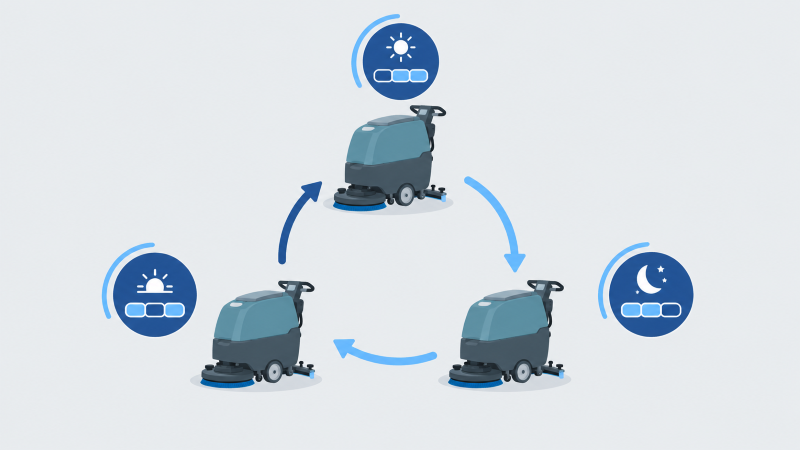
In a multi-shift operation, the most common failure is a machine that's still on charge when its shift starts. The fix is rotation planning:
Service work gets skipped when it has no schedule. Put the fleet on fixed intervals:
| Interval | Check | Done by |
|---|---|---|
| Daily | Battery, tanks, squeegee, brush | Assigned operator |
| Weekly | Full clean, blade check, battery charge level | Shift lead |
| Monthly | Deep service, brush and hose inspection | Maintenance |
The daily checks are the same ones in our pre-op checklist and daily maintenance checklist — the fleet version just makes sure they happen on every machine.
Every fleet needs an answer to one question: what happens when a machine goes down mid-week? The options are a spare machine, a service plan with fast turnaround, or accepting that the floor goes uncleaned until the repair is done. For facilities that clean daily, a spare is usually worth it — one machine out of three being down shouldn't mean the floor schedule stops. The math for how many machines you need in the first place is in our warehouse sizing guide, and the labor cost of a down machine is in our cost guide.
If that feels too basic, it's the point — the system only works if people actually use it. Our operator training guide shows how to make the daily log part of the routine instead of extra paperwork.
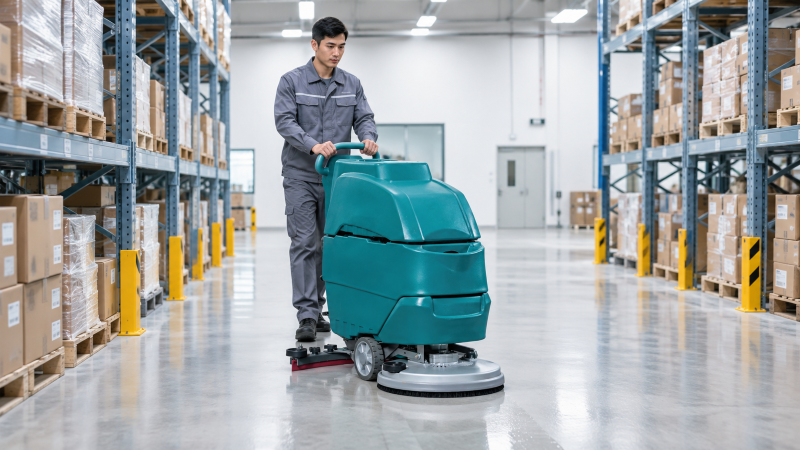
At least one per shift, plus a spare if the floor must be cleaned daily. Two shifts and one machine means one shift always starts with a dead or half-charged battery.
Assign each shift its machine and charge it fully after every shift, on a fixed schedule. If machines share shifts, label chargers and track charge times so nobody unplugs a half-charged battery.
Daily operator checks, a weekly clean and inspection, and a monthly deep service. Fixed intervals are what keep service from being skipped when everyone is busy.
Assign one operator or one shift per machine. When a machine belongs to someone, its battery, squeegee, and service history get looked after.
A floor scrubber fleet fails for one reason: no ownership, no rotation, no schedule. Assign each machine an owner, plan the charging rotation for your shifts, put service on fixed intervals, and keep a simple log per machine — and the fleet will be ready when the shifts need it. Whether your fleet is walk-behinds like the BA730 or ride-ons like the BA850, the management system is the same. Our facility manager maintenance guide rounds out the picture.
Contact TerraScrub
Email: Donnie@terrascrubx.com
WhatsApp: +86 166 0187 1755
No. 600, Jiye Road, Sheshan Town, Songjiang District, Shanghai, China