Ask most facility managers what it costs to clean their floors and you'll usually get a blank look. Cleaning budgets get set by guesswork, and contractors quote a lump sum without anyone breaking down the math behind it. That's a shame, because the number is actually computable. This guide walks through a simple formula, applies it with real, citable data, and shows why the cleaning method you choose changes the cost per square foot more than almost anything else.
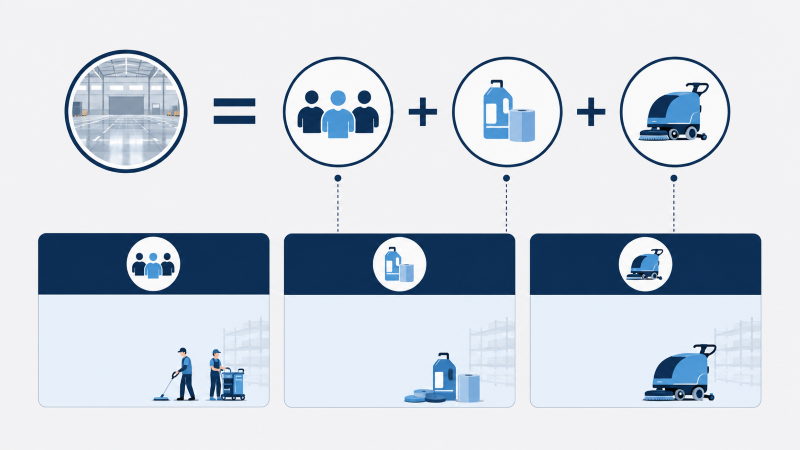
Every floor cleaning cost breaks down into three pieces:
Labor is where the real money goes. That's also where a machine changes the picture, because it cuts the time component dramatically.
Cost per square foot looks like this:
(Area ÷ coverage per hour) × hourly wage + supplies + equipment amortization
Supplies and equipment get added on after the labor part, using your own numbers. Nothing about this formula requires guessing.
Let's use a 10,000 square foot warehouse and a real wage figure. According to the U.S. Bureau of Labor Statistics, the median hourly wage for janitors and building cleaners was $17.27 in May 2024 (BLS source).
| Method | Realistic coverage | Time per 10,000 sq ft | Labor per sq ft | Labor per pass |
|---|---|---|---|---|
| Manual mopping | 1,000–1,500 sq ft/h | 7–10 hours | ~$0.012–$0.017 | ~$120–$170 |
| A3 walk-behind scrubber | 12,000–14,000 sq ft/h | 45–50 minutes | ~$0.0013 | ~$13–$14 |
| A7 ride-on scrubber | 30,000–35,000 sq ft/h | ~20 minutes | ~$0.0005 | ~$6 |
A few honest notes on these numbers. The manual coverage range is a typical figure — test it with your own crew. The machine coverage is the rated speed from the spec sheets (the A3 is rated at 2,200 m²/h and the A7 at 5,500 m²/h), cut to realistic conditions with aisles and turns. The per-square-foot figures are labor only — supplies and the machine itself are not included yet. All of it is arithmetic you can redo with your own wage.
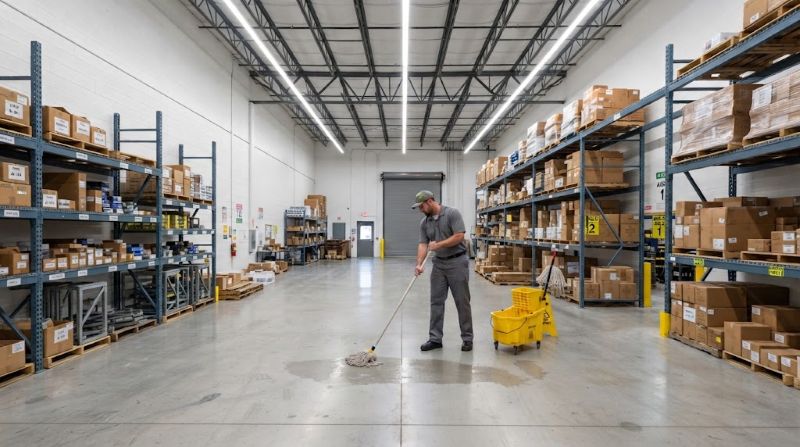
The machine price is the part most people focus on, but it spreads out over years of use. The way to think about it is amortization:
Machine price ÷ (years of service × cleaning passes per year × square feet per pass)
Take a machine that runs 100,000 square feet of cleaning a week, 50 weeks a year, for five years. That's 25 million square feet over its life. Even a five-figure machine price works out to a fraction of a cent per square foot when spread across that much work. The exact number depends on your quote, so we won't invent one here — that's also why we quote machines directly rather than publishing a one-size-fits-all price. You can see how machine purchase costs fit into the bigger budget picture in our commercial floor scrubber cost guide.
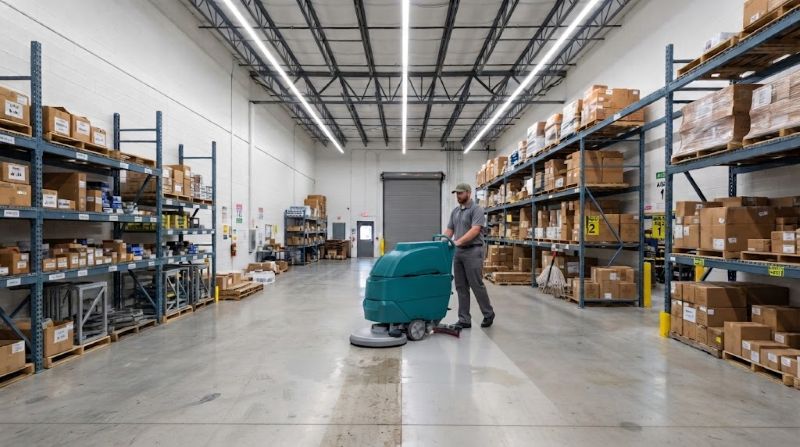
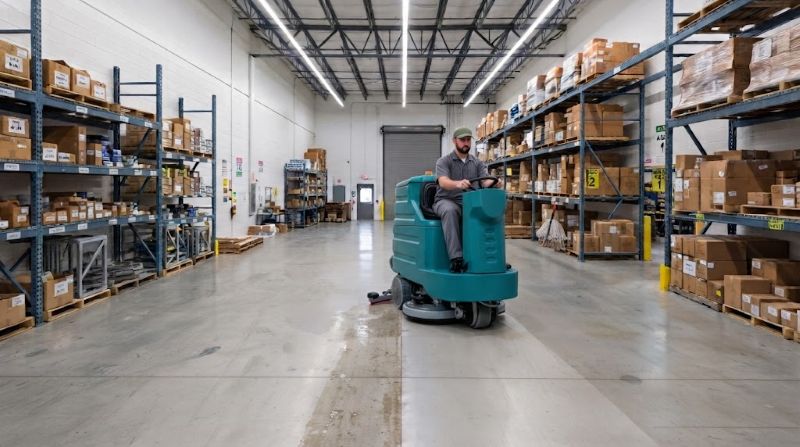
With manual mopping and a median U.S. cleaning wage, labor alone runs roughly $0.012 to $0.017 per square foot. With a walk-behind scrubber it drops to about $0.0013, and with a ride-on around $0.0005. Your wage and layout move these numbers, which is why the formula matters more than the figure.
Run the time math. A 10,000 square foot floor takes 7 to 10 hours by mop and under an hour with a walk-behind scrubber. Multiply the hours saved by your hourly wage and the machine pays for a meaningful share of itself every year. Your exact payback depends on your quote and cleaning frequency.
Time one cleaning pass, divide your floor area by the hours it took, then multiply by your hourly wage. Add your chemical cost per pass and the machine's amortized cost. That's your true cost per square foot.
Because a useful price depends on configuration, battery or corded setup, and shipping. A fixed number on a blog would be wrong for half the people reading it. We quote directly so you get a number that matches your situation.
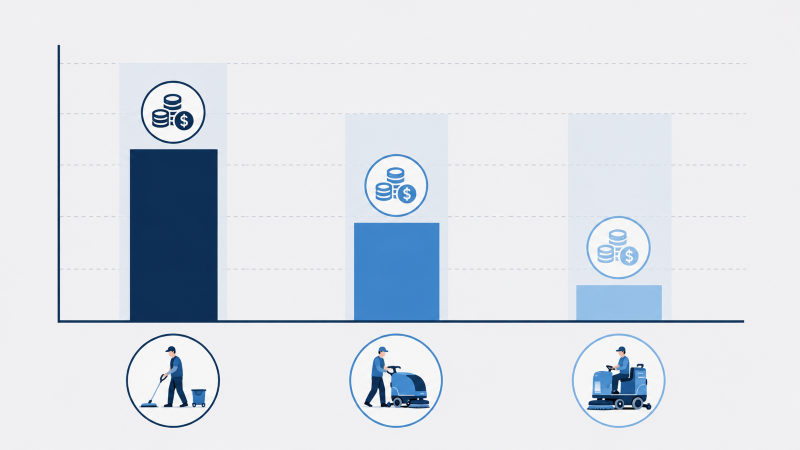
Floor cleaning cost per square foot is mostly labor, and labor is mostly time. A scrubber doesn't change your wage — it changes how many square feet an hour of that wage covers, and that's where the saving comes from. Run the formula with your own numbers, and if you want a quote that matches your floor and cleaning schedule, the A3 and A7 pages are the place to start. Wage data comes from BLS, and for safety guidance on wet floors, OSHA's slips and falls page is worth a read.
Contact TerraScrub
Email: Donnie@terrascrubx.com
WhatsApp: +86 166 0187 1755
No. 600, Jiye Road, Sheshan Town, Songjiang District, Shanghai, China