A floor scrubber is only as good as the person running it. Hand a new machine to someone who's never touched one and within a week you'll see the signs: streaks left on the floor, a squeegee that's been dragged over debris, a battery that keeps dying halfway through a shift. None of that is the machine's fault. It's a training problem. The good news is you don't need a week of classes. A focused 30-minute session, plus a checklist they keep on the machine, gets a new operator cleaning safely and properly from day one. Here's the exact program we'd run.
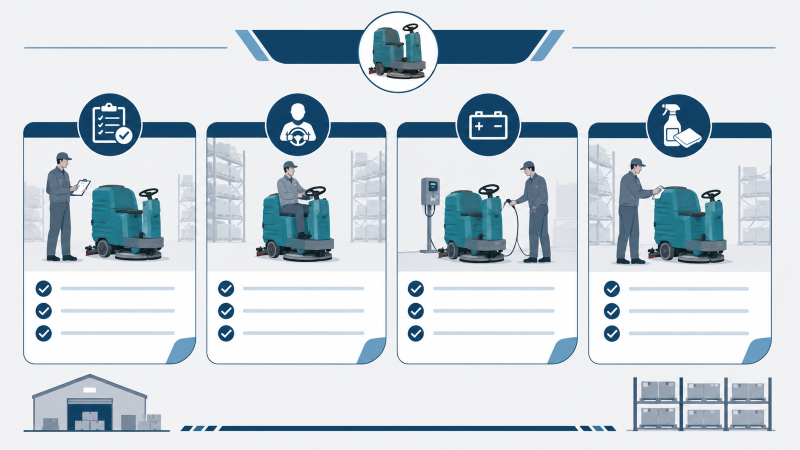
Split the session into four blocks. Each one is short, hands-on, and ends with the operator doing the task themselves while you watch:
Before the machine ever moves, the operator runs through the same check every time:
This takes under a minute once it becomes habit. It's also the moment when most problems get caught before they become expensive repairs.
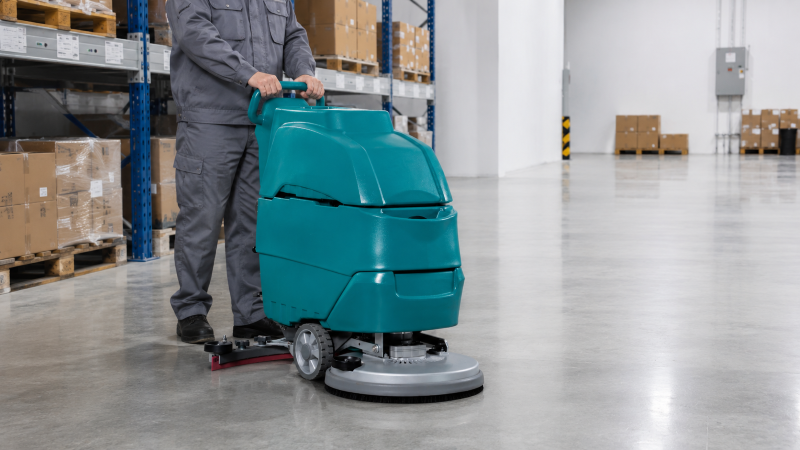
Have the operator walk the machine through a straight pass, then a turn, then a full aisle. Watch for these three things:
Let the operator do two full passes on their own while you follow behind and correct gently. Ten minutes of supervised practice beats an hour of theory.
Most exported scrubbers run on lead-acid batteries, and lead-acid has simple but strict rules. Make sure every operator knows them:
Battery habits are the difference between a battery that lasts years and one that needs replacing in months. Our battery care guide and charging best practices guide go deeper.
Five minutes at the end of the shift saves an hour of cleaning or repair later.
Print this and tape it to the machine. It's the whole training program on one card:
Thirty minutes of supervised practice covers the basics. Plan a second short session after a few shifts to correct bad habits before they set in, and a refresher every few months.
Have them run the full pre-op check, one cleaning pass, and the after-shift routine without prompting. If they complete all three correctly, they're ready.
Going too fast. It causes streaks, wet floors, and missed spots, and it's also the easiest habit to break once someone shows them the difference speed makes.
Lead-acid batteries fail fastest when they're left discharged or charged partially. If the operator doesn't know the charging rules, the battery dies early no matter how good the machine is.
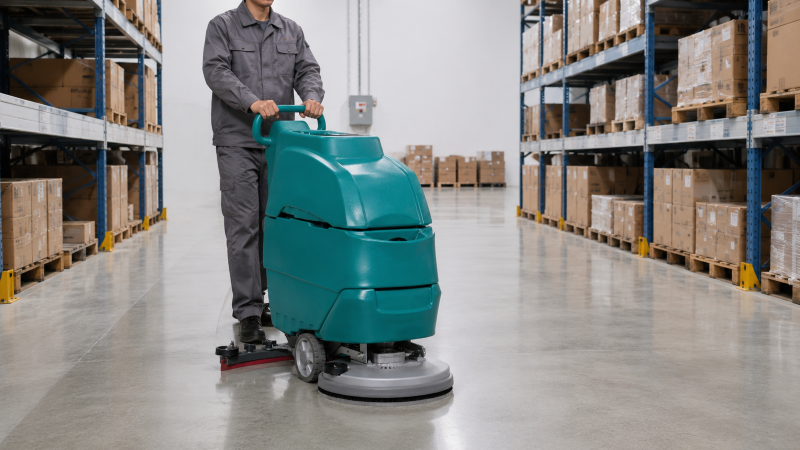
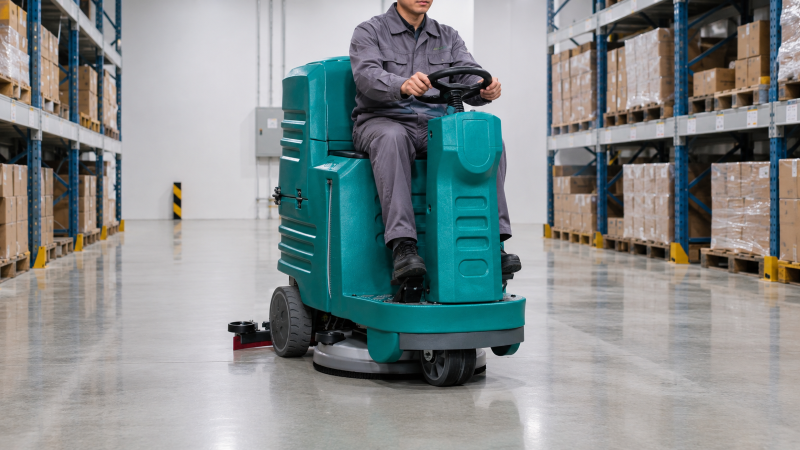
Training doesn't need to be complicated. One 30-minute session, a printed checklist, and a supervisor who watches the first few shifts will prevent most of the streaks, damage, and battery failures that make machines look bad. If you're setting up a machine for your team, the A3 walk-behind and A7 ride-on pages are good starting points, and our operator safety tips guide rounds out the basics. For safety around wet floors during training, OSHA's slips and falls page is a useful reference.
Contact TerraScrub
Email: Donnie@terrascrubx.com
WhatsApp: +86 166 0187 1755
No. 600, Jiye Road, Sheshan Town, Songjiang District, Shanghai, China