If your warehouse sits right around the 10,000 square foot mark, you're in the awkward middle. The floor is too big to keep clean with a mop — a full pass takes your crew most of a day — but it's also not so huge that you need a full-size ride-on. Most people in this spot choose between a walk-behind machine for tight aisles and a compact ride-on when speed matters. That's what this guide is for. We'll go through the sizing math, when each type makes sense, and two models we'd look at first for a floor this size.
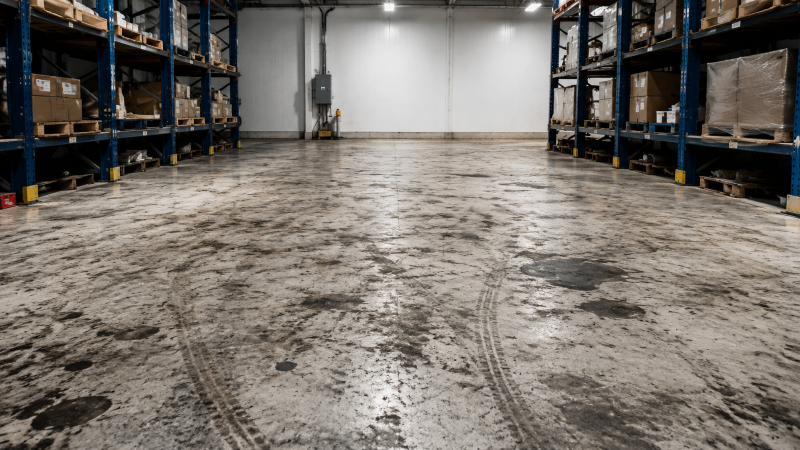
Think about what mopping 10,000 square feet actually means. A person with a deck brush or a mop covers maybe 1,000 to 1,500 square feet an hour when the floor is reasonably clear. That's a full shift, or more, just for floors. It's the kind of job that gets put off, and when it does get done, it's done quickly and not very well.
A walk-behind scrubber changes that. Even a modest machine covers around 10,000 to 13,000 square feet an hour in real warehouse conditions, so the whole floor can be done in under an hour. That's the difference between a floor that gets cleaned every week and a floor that gets cleaned whenever someone has a spare afternoon.
Every scrubber comes with a rated coverage figure, and it's worth knowing what that number does and doesn't mean. The rated speed assumes a wide open, obstacle-free floor. In a real warehouse, with racks, pallets, and aisles to turn around in, you'll get maybe half to two-thirds of the rated number. That's still plenty for a 10,000 square foot floor.
| Machine | Brush width | Rated coverage | Realistic coverage | Time to clean 10,000 sq ft |
|---|---|---|---|---|
| Walk-behind (A3) | 530 mm | ~23,700 sq ft/h | ~12,000–14,000 sq ft/h | 45–50 minutes |
| Ride-on (A7) | Compact ride-on | ~59,200 sq ft/h | ~30,000–35,000 sq ft/h | ~20 minutes |
Those times assume an open layout with normal aisles. If your warehouse is packed tight with shelving, add time. If it's mostly open floor, you'll be closer to the rated number. The point is that with either machine, you're talking about an hour or less, not a day.
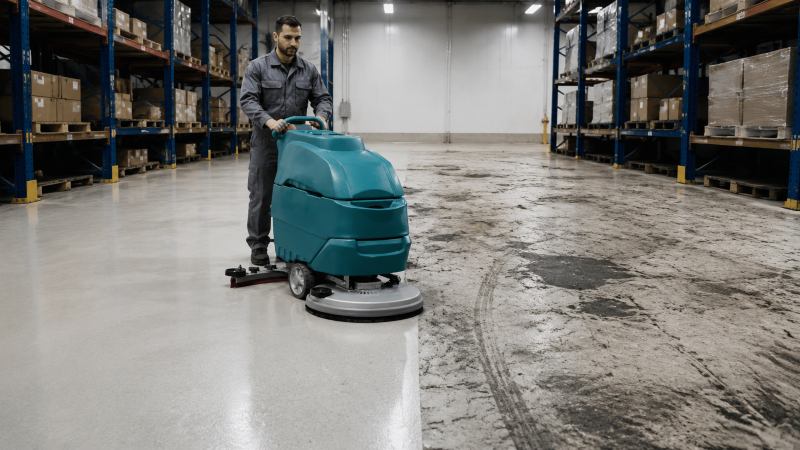
There are two sensible ways to clean a 10,000 square foot floor. The first is a walk-behind machine like the A3. It's cheaper, stores easily, and handles tight aisles without a problem. The second is a compact ride-on like the A7. It costs more, but it cuts cleaning time roughly in half and is much easier on the operator during longer shifts.
Which one is right depends mostly on how often you clean. Once or twice a week, a walk-behind is plenty. If you're running the floor three or more times a week, or your warehouse is growing, the time saving from a ride-on adds up fast. Both are reasonable at this size. What doesn't make sense is a full-size ride-on built for 50,000 square foot halls — that's money you won't use.
If we had to narrow it down to two machines for a 10,000 square foot floor, these are the ones.
| A3 (walk-behind) | A7 (ride-on) | |
|---|---|---|
| Type | Walk-behind, 530 mm brush path | Ride-on, compact turning |
| Rated coverage | 2,200 m²/h (~23,700 sq ft/h) | 5,500 m²/h (~59,200 sq ft/h) |
| Footprint | Compact body (127×55 cm), narrow aisles | On-spot turning, small turning diameter |
| Extra | Adjustable brush pressure, tool-free brush change | Maintenance-free batteries, auto squeegee, intelligent controls |
| Best for | Tight aisles, first machine, smaller budget | Faster weekly passes, operator comfort, growing facility |
The A3 is the one to start with if your aisles are tight and you want to keep the upfront cost down. The A7 ride-on is the pick when cleaning speed and operator comfort matter more than the price difference.
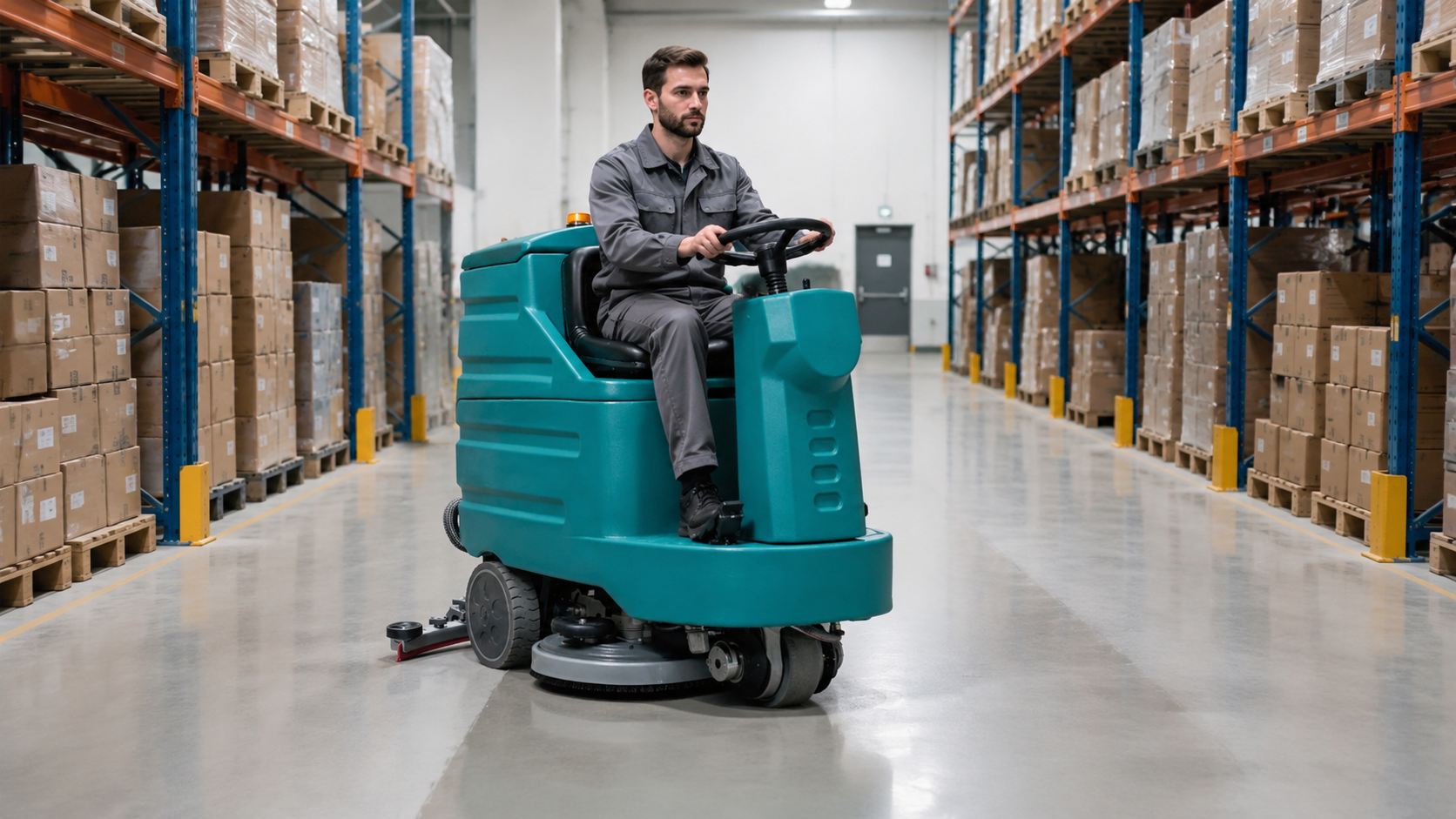
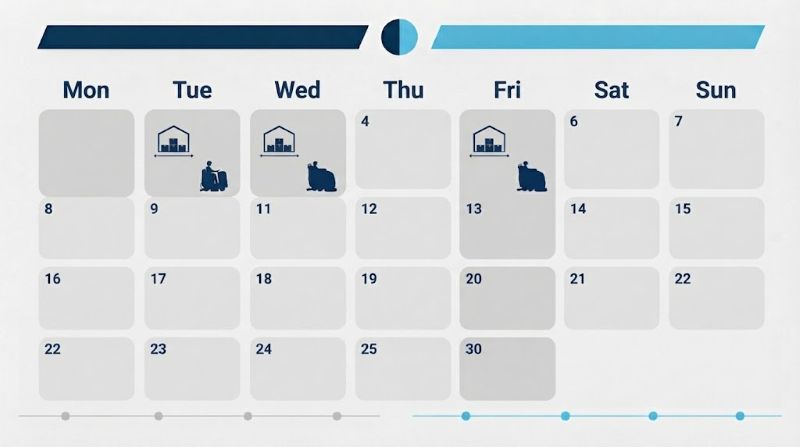
A machine only helps if it actually gets used. Here's a simple rhythm that keeps a floor this size looking decent without eating the whole week:
| Day | Job | Time |
|---|---|---|
| Monday | Main aisles + loading area | 30–40 minutes |
| Wednesday | Full floor pass | 60 min with the A3, about 20 with the A7 |
| Friday | Full pass + spot treatment of stains | 60–75 minutes |
If your warehouse gets heavy forklift traffic, add one more full pass mid-week. If it's mostly storage with light traffic, twice a week is plenty.
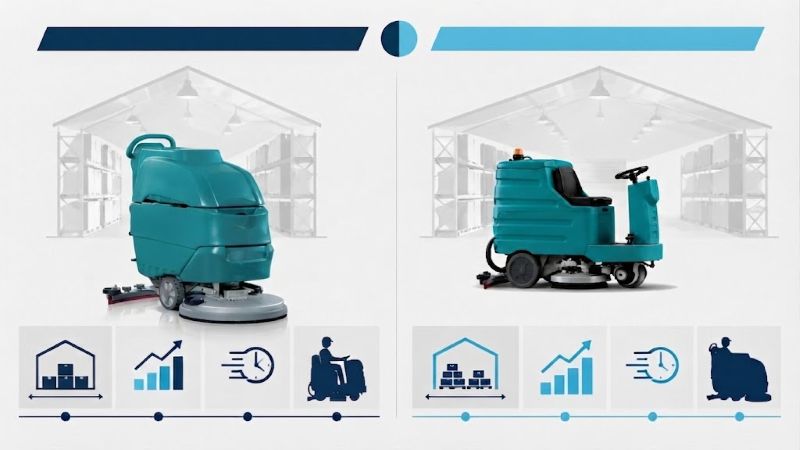
Yes. The A3 covers about 2,200 m² per hour rated, so a full pass of 10,000 square feet takes 45 to 50 minutes in a normal layout. That's the sweet spot for this size of building.
The A3 is a walk-behind machine, and the A7 is a compact ride-on. The A7 cleans at roughly two and a half times the rated speed, so it turns a full floor pass into about 20 minutes, but it costs more.
When you're cleaning three or more times a week, when the operator is spending most of a shift on floors, or when the warehouse is likely to grow. Under those conditions the time saving pays for the upgrade.
With the A3 walk-behind, expect 45 to 50 minutes per full pass. With the A7 ride-on, around 20 minutes. Tighter aisles and lots of pallets will add to both.
For a 10,000 square foot warehouse, you've got two sensible picks. The A3 walk-behind brings a full floor pass down to under an hour, fits in storage, and keeps the budget in check. The A7 ride-on cuts that to about 20 minutes when cleaning frequency or operator fatigue is the issue. For more on sizing, see our floor scrubber size chart, and if stains have already taken hold, our guide on removing oil stains from concrete covers the cleanup. For workplace safety guidance on slips and falls, OSHA has a useful reference.
Contact TerraScrub
Email: Donnie@terrascrubx.com
WhatsApp: +86 166 0187 1755
No. 600, Jiye Road, Sheshan Town, Songjiang District, Shanghai, China