

Labor is the biggest line item in any floor cleaning budget, and it's also the one most facility managers never measure. The crew mops, the floor gets dirty again, and nobody knows exactly how many hours actually went into it. The good news is that cutting cleaning labor isn't about pushing people harder. It's about removing the slow parts of the job — the mopping, the backtracking, the re-cleaning. This playbook lays out six levers that typically cut floor cleaning hours by a third or more, and how to track whether they're working.
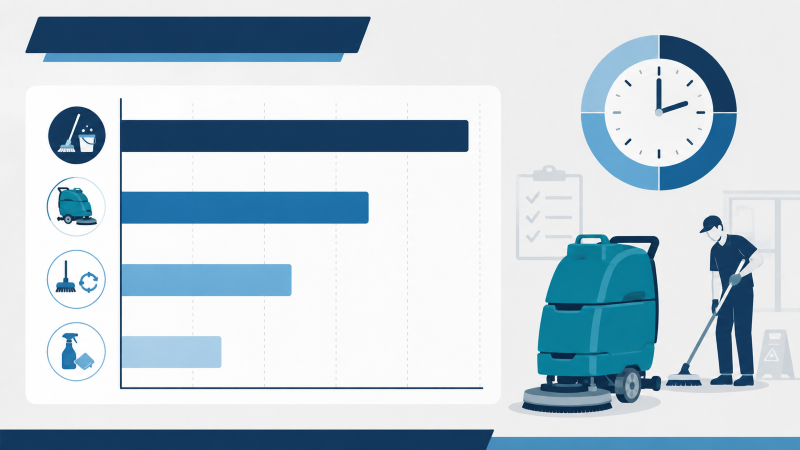
Before you cut anything, know where the hours go. In most facilities the split looks like this:
Track one week with a simple log: task, method, minutes. You'll usually find that mopping and re-cleaning eat more time than anyone guessed.
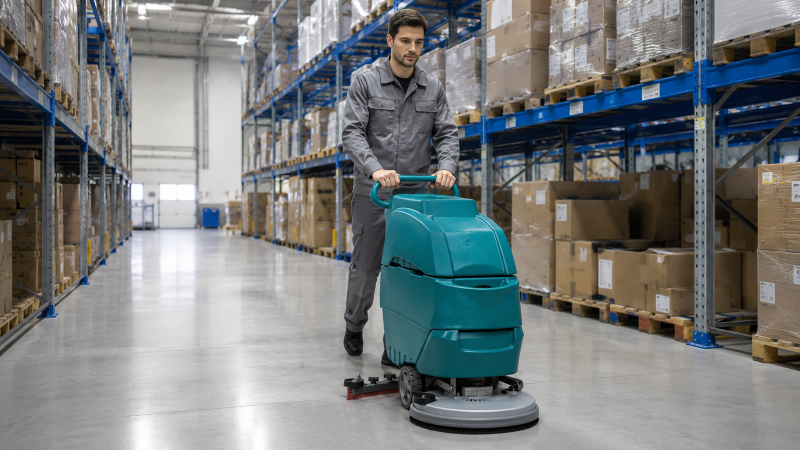
A walk-behind scrubber cleans roughly ten times faster than mopping the same area, and a ride-on roughly twice as fast as a walk-behind on open floors. Sizing the machine to the floor is the single biggest time lever. Our warehouse sizing guide has the math, and the cost per square foot guide shows the labor side of it.
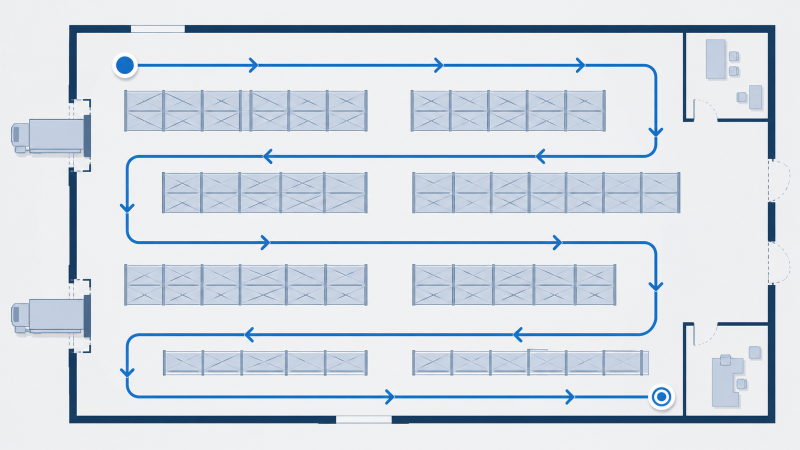
Most cleaning routes are accidental. A planned route that starts at the back, works in straight passes, and ends near the exit cuts out the backtracking. On a 10,000 square foot floor, saving even ten minutes a pass adds up to over an hour a week.
An untrained operator goes slow, leaves streaks, and re-does sections. A thirty-minute training session fixes most of that, and our operator training guide gives you the program.
Reactive cleaning is expensive cleaning. A weekly schedule keeps dirt from building up, and a maintained floor takes less time per pass than a neglected one. If stains have already set in, our oil stain removal guide gets you back to a surface that's easy to maintain.
Sealed concrete cleans faster than raw concrete because spills stay on the surface. Sealing a floor once saves minutes on every pass after that. Streaks and water spots also slow things down by forcing re-cleaning — the fixes in our streaks guide prevent that.
Pick one number — minutes per 1,000 square feet — and track it weekly. When the number drops, you know the changes work. When it climbs, something broke. That single metric turns cleaning from a guess into a managed process.
| Task | Method | Hours per week | After changes |
|---|---|---|---|
| Full floor pass, 10,000 sq ft | Mopping | 7–10 | 1 with a scrubber |
| Spot and stain treatment | Manual | 2–3 | 1 with weekly schedule |
| Re-cleaning streaks and spots | Manual | 1–2 | Near zero with training |
| Setup and moving supplies | Manual | 1–2 | 0.5 with a machine on-site |
These are illustrative ranges from typical facilities — your numbers come from your own time log. The pattern is what matters: machine cleaning and a planned schedule turn a 12–17 hour week into roughly 3–4 hours.
Facilities that switch from mopping to a correctly sized scrubber, add a route, and train operators typically see labor hours drop by a third to a half. The exact number depends on your floor size and how much time you're wasting today.
For floors over a few thousand square feet, usually yes — but run the time math first. If the machine saves four hours a week, multiply that by your hourly wage to see what it's worth per year. That's the honest way to decide, and the cost guide shows the calculation.
Keep it to one number: minutes per 1,000 square feet, logged once a week. That's enough to see trends without turning cleaning into an admin job.
Stop mopping large floors. Replacing a 7-to-10-hour mopping pass with an hour of scrubber time is the single fastest change you can make.
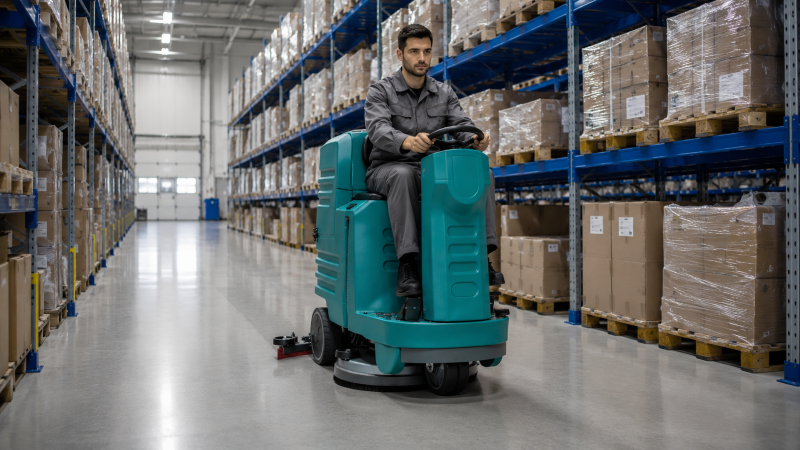
Cutting floor cleaning labor isn't about working people harder, it's about removing the slow parts of the job. Size the machine right, plan the route, train the operators, clean on a schedule, keep the floor easy to clean, and measure the result. Taken together, those levers routinely cut cleaning hours by a third or more. If you're ready to pick a machine, the A3 walk-behind and A7 ride-on are the two to compare first.
Contact TerraScrub
Email: Donnie@terrascrubx.com
WhatsApp: +86 166 0187 1755
No. 600, Jiye Road, Sheshan Town, Songjiang District, Shanghai, China