
FACILITY PREP · 2026
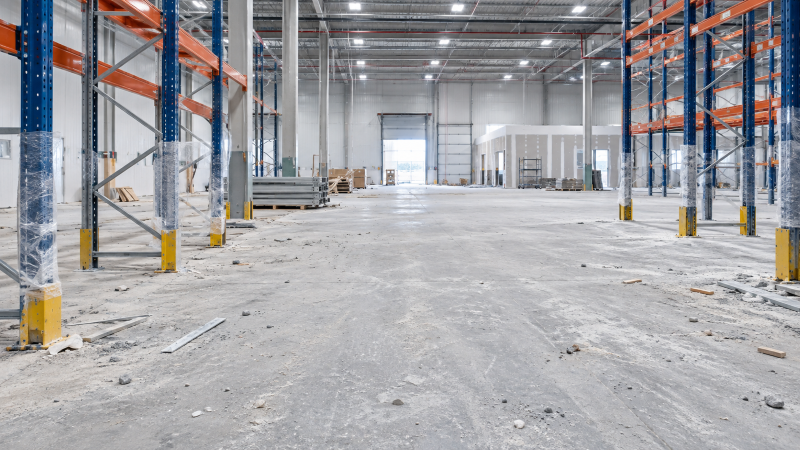
A newly finished floor isn't ready for normal cleaning yet. Construction leaves behind grit, fine dust, cement film, and adhesive residue — and the wrong cleaning order turns all of it into a muddy paste that gets ground into the surface. The rule for post-construction cleaning is simple: remove dry debris first, control the dust, then wet-clean in passes.
If you run a scrubber first, you wet the dust and turn the floor into a mud bath. That paste gets pushed into the pores of the concrete and into every crack, and it takes far longer to remove than the dry dust would have.
The correct order is always: clear debris → collect dust dry → wet-clean in passes → treat residue → dry and inspect.
Step 1: Clear the bulk debris
Shovel or hand-collect offcuts, packaging, and metal shavings before any machine touches the floor. Metal shavings in particular should never meet a brush — they scratch.
Step 2: Collect the dust dry
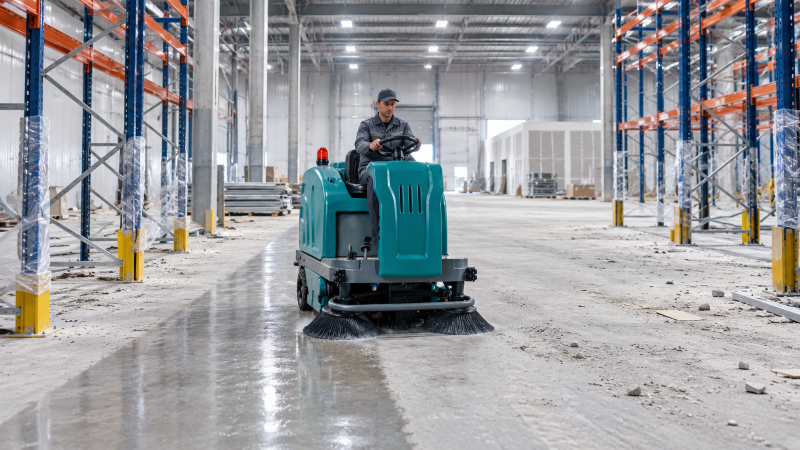
Use a sweeper with dust control so the fine dust is collected rather than blown into the air and re-deposited on the floor you just cleaned. Large halls clear fastest with a ride-on unit; tight areas with a walk-behind or vacuum.
Step 3: First wet pass — expect it to look worse
The first scrubber pass with clean water reveals the cement film and bonded dust. This is normal. Work in sections and change the recovery water often — reusing dirty water just redistributes the residue.
Step 4: Second pass with a mild cleaner
For cement haze, use a mild, acid-free cleaner matched to the floor finish and scrub again. Avoid aggressive acidic products on new concrete, coatings, and sealers — they can etch or dull the surface you just paid for.
Step 5: Dry, inspect, repeat where needed
Let the floor dry fully and inspect under good light. Patches that still look hazy get a targeted re-clean rather than another whole-floor pass. Do this inspection before any racking or stock goes in — it's far easier to fix an empty floor.
| Stage | Equipment | Why |
|---|---|---|
| Coarse debris | Hand tools, then a ride-on sweeper | Clears large areas without grinding grit into the slab |
| Dust collection | Sweeper with dust control or industrial vacuum | Stops re-suspension — the dust problem in our dusting guide |
| Wet cleaning, smaller areas | BA530 walk-behind | Fits doorways and tight areas, 530mm path |
| Wet cleaning, large halls | BA850 ride-on | 5,800 m²/h with 180L/195L tanks for fewer refills |
After handover, construction dust keeps appearing for weeks because it settles out of the air and off racking. Plan a short but regular cleaning cycle — the frequency logic in our cleaning frequency guide applies, just at the higher end until the dust settles. Sealing the floor now also makes everything that follows easier, as covered in our floor protection guide.
How soon can I scrub a new coated floor?
Follow the coating manufacturer's cure time — it's typically measured in days, and cleaning too early can damage the finish permanently. Confirm with the installer before scheduling the machine.
Can a scrubber remove cement film?
Yes, usually with a mild cleaner and repeat passes. Change the recovery water often, because cement residue recirculated in dirty water just goes back onto the floor.
What about metal shavings?
Never let a scrubber or sweeper brush run over them. Collect shavings by hand or with a vacuum first — brushes drag them across the floor and leave scratches.
How many passes should I expect?
Two is typical: one with clean water to reveal the state of the floor, and one with a mild cleaner. Heavily soiled areas get targeted repeat passes rather than redoing the whole hall.
Post-construction floor cleaning is a sequence, not a scrub: clear debris, collect dust dry, wet-clean in passes, treat residue, then inspect before racking goes in. Get the order right and a new floor starts its life clean instead of scratched. For the wider upkeep picture, our 5S floor guide and tire mark guide cover the routines that follow.
Contact TerraScrub
Email: Donnie@terrascrubx.com
WhatsApp: +86 166 0187 1755
No. 600, Jiye Road, Sheshan Town, Songjiang District, Shanghai, China