
Epoxy floor coatings do not last forever. Within five to seven years, most industrial epoxy systems show visible aging: yellowing under skylights, chalking in high-traffic lanes, micro-scratches from forklift tires, and in worst cases, delamination where moisture or chemical exposure breaks the bond between coating and concrete. The aging is not random. It concentrates in predictable zones based on traffic, sunlight, and moisture. And cleaning practices, both good and bad, directly accelerate or slow the process. This guide covers the four stages of epoxy floor aging, the specific zones where wear concentrates, how improper cleaning damages the coating, and how the right scrubber setup with soft pads and neutral-pH chemicals extends coating life by years.
Four stages of epoxy floor aging
Epoxy coatings age in a predictable sequence. Understanding where your floor is in this progression tells you whether you need a refresh coat, a full recoat, or a complete removal and reapplication.
Most facility managers first notice aging at Stage 2, when the floor looks dull despite regular cleaning. By Stage 3, the chalking effect means the epoxy resin is actively breaking down. The chalky powder is partially cured resin particles, and once they start coming off, the coating thickness is decreasing. For a deeper comparison of scrubber models suited for different epoxy floor conditions, see our epoxy floors scrubber guide.
Wear zones: where epoxy floor aging concentrates
Aging does not happen evenly across a 10,000 m² warehouse floor. It clusters in specific zones based on traffic patterns, sunlight exposure, and chemical contact. Mapping these zones helps you target maintenance and plan recoating schedules.
Forklift lanes carry the heaviest mechanical load. A 2-ton forklift with solid rubber tires exerts point loads of 400-600 psi on the epoxy surface, which is within the compressive strength of most epoxy systems (3,000-5,000 psi) but creates micro-scratches over thousands of passes. Loading docks see impact wear from pallets being dragged and dropped. Skylight areas yellow faster because UV radiation breaks down the amine curing agent in the epoxy, a photochemical process called amine blush. Entryways collect moisture and grit tracked in from outside, which acts as a mild abrasive underfoot.
The ISSA (International Sanitary Supply Association) provides industry standards for commercial floor maintenance that include specific guidance on coating care, noting that improper chemical selection is responsible for premature coating failure in roughly 30% of commercial floor systems.
How cleaning practices affect epoxy coating life
Cleaning can extend epoxy life by five years or cut it in half. The difference comes down to four factors: pad abrasiveness, chemical pH, water temperature, and brush pressure.
Black stripping pads are the most common mistake. They are designed to remove floor finish, and on epoxy they do exactly that: remove the topcoat resin. A single pass with a black pad at 25 kg pressure can remove 0.1-0.2 mm of coating thickness. Over months of daily cleaning, that adds up. White pads clean without abrading the surface. Red pads handle heavier soil with minimal scratching. Set brush pressure to 10-15 kg for daily cleaning, which is enough to remove dirt without grinding the coating.
Acidic cleaners below pH 6 etch the epoxy surface, creating micro-pitting that traps dirt and accelerates wear. Alkaline cleaners above pH 10 leave a chemical film that dulls the gloss and can soften the topcoat over time. Stay in the pH 7-9 range with a dedicated epoxy floor cleaner or a neutral floor cleaner diluted per manufacturer instructions. For guidance on matching cleaner chemistry to floor type, see our polished concrete floor maintenance guide, which covers pH selection in detail.
Common epoxy aging damage types
Four distinct damage types show up on aging epoxy floors. Each has a different root cause and a different fix.
OSHA's walking-working surfaces standard (29 CFR 1910.22) requires employers to keep floors in a condition that prevents slips. Aged epoxy with chalking or delamination can reduce slip resistance and create compliance issues.
Matching scrubber setup to extend epoxy coating life
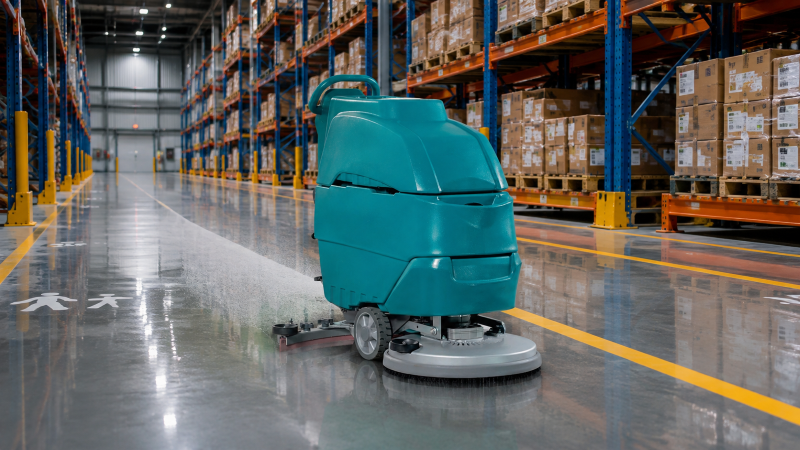
The TerraScrub A3 walk-behind covers 2,200 m²/h with adjustable brush pressure from 10-30 kg. Set it to 12 kg with white pads for daily epoxy cleaning. Its 530mm path fits narrow warehouse aisles and tight corners where forklift traffic concentrates wear. The parabolic squeegee recovers water immediately, leaving the epoxy surface dry within 60 seconds, which prevents moisture penetration into micro-scratches.
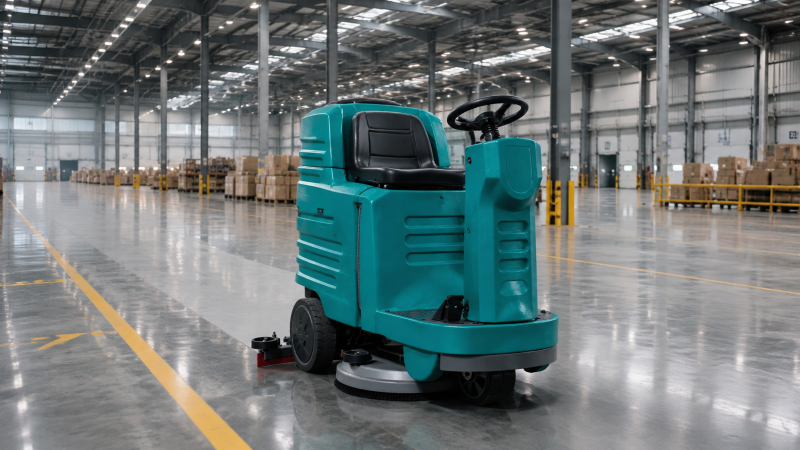
For larger facilities, the TerraScrub A5 ride-on delivers 2,700 m²/h with a 533mm deck and 65L/75L tanks that cut refill stops. Same soft pad and neutral-pH chemistry, just faster coverage. Both machines use pad drivers, not direct brush contact, so operators can swap between white (daily), red (periodic deep clean), and beige (monthly burnish) pads without changing equipment.
Not sure if your epoxy floor is aging prematurely? Email Donnie@terrascrubx.com or message on WhatsApp. Tell us your floor area, coating age, and visible wear patterns. We will recommend the right pad type, brush pressure, and cleaning chemical to extend your epoxy coating life.