
Side brushes are the part of a floor sweeper that turns a straight-line cleaning path into full edge and corner coverage. Without them, the main cylindrical brush clears a 700mm strip down the middle and leaves a band of debris along every wall, curb, and rack leg. The TerraScrub BA1400 ride-on sweeper runs two independently motorized side brushes at 260mm diameter each, extending the cleaning width from 700mm to 1,400mm and pulling debris from baseboards, pallet corners, and expansion joints that the main brush cannot reach. This guide breaks down how side brushes work, which bristle materials suit different debris types, how much corner coverage you actually get, and when to replace worn brushes before gaps appear.
How side brushes extend sweeper cleaning width
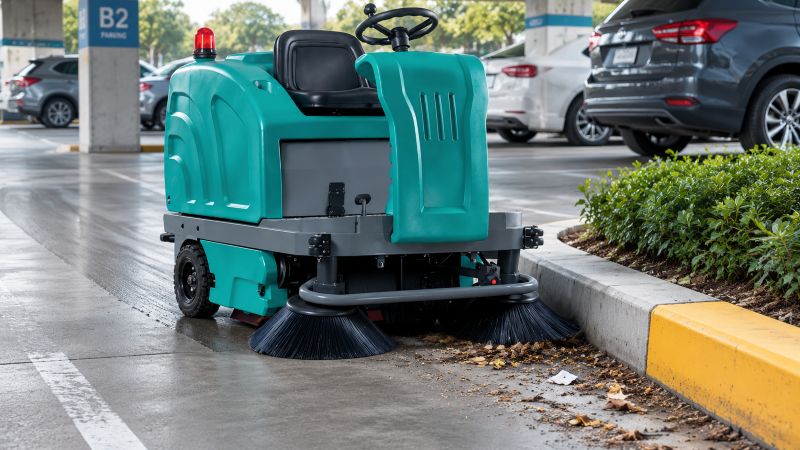
The main brush on a ride-on sweeper is a cylindrical roller mounted across the machine belly. It spins fast and flings debris upward into the dust hopper. But the cylinder has a fixed width, 700mm on the BA1400, and it sits between the wheels. Anything outside that 700mm band, against a wall, curb, or racking, gets missed. Side brushes fix this.
Each side brush is a disc of bristles mounted on its own 120W motor, angled outward at roughly 15-20 degrees from the machine body. When the brush spins, its bristles reach past the machine footprint and sweep debris inward toward the main brush path. The main brush then picks it up. With both side brushes deployed, the BA1400 covers 1,400mm in a single pass. With one side brush retracted, it covers about 1,050mm. Operators can toggle each side independently, which matters when cleaning along a wall on one side and open floor on the other.
The ISSA (International Sanitary Supply Association) recommends that facility cleaning crews verify edge coverage during equipment audits, since debris accumulation along baseboards is a leading cause of re-cleaning labor in commercial facilities.
Side brush bristle materials for different debris
Not all side brushes use the same bristle. The three common materials are nylon, polypropylene, and wire blend. Each handles a different debris profile:
Nylon bristles are soft and flexible. They work well for fine dust, sand, and light litter on smooth surfaces like sealed concrete and asphalt. They wear faster on rough surfaces but will not scratch painted curbs or coated flooring. Polypropylene is stiffer and more durable. It handles gravel, leaves, and packing tape fragments without bending out of shape. Wire blend bristles, usually steel or brass mixed into a polypropylene base, are for heavy industrial debris like metal shavings, bolts, and caked-on dirt. Wire brushes should not be used on coated or painted surfaces since they scratch.
For most outdoor parking lots, warehouse docks, and industrial yards, a polypropylene or nylon-poly blend is the right default. Wire blend is for foundries, metalworking shops, and construction sites where coarse debris is the norm. For more on matching equipment to surface type, see our concrete floors buyer's guide.
Corner coverage and edge cleaning performance
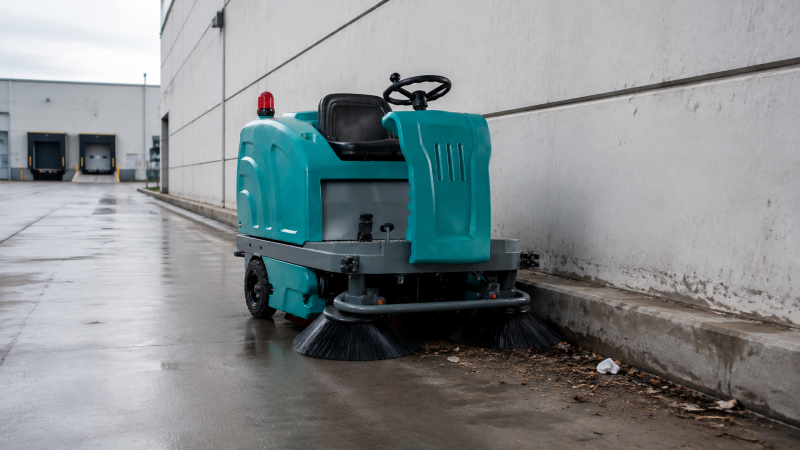
A side brush does not clean 90-degree inside corners perfectly. The brush is circular and rotates in an arc, so it reaches into a corner to about 80-85% of the bristle radius. That means in a tight inside corner where two walls meet at 90 degrees, the brush clears debris from the corner vertex but may leave a small triangle of fine dust in the deepest point. For outdoor applications like parking lot corners and dock aprons, this residual is negligible because wind and vehicle traffic disperse it. For indoor warehouse aisles with 90-degree rack corners, a quick manual sweep of the corner vertex once per shift handles the remainder.
Along straight wall runs and curb lines, side brush coverage is effectively 100%. The bristles sweep flush against the vertical surface and pull debris inward continuously. The BA1400's independent side brush control lets the operator drop the left brush when running a wall on the left side and raise it when the path opens up, which prevents unnecessary bristle wear on open floor.
Side brush maintenance and replacement intervals
Side brushes wear. The bristles shorten with every hour of use, and shorter bristles reach less far into corners. A brush that started at 260mm diameter might be down to 220mm after 150 hours of operation, and at that point its corner reach drops by roughly 20mm on each side. Replace brushes when bristle length is 60-70% of original, which typically falls around 200-250 operating hours for polypropylene on rough asphalt, or 300-350 hours on smooth sealed concrete.
Debris wrapping is the other issue. Plastic film, packing straps, and long grass can wrap around the brush shaft and stall the motor. The BA1400 side brush motors are independently fused, so a stall trips the breaker rather than burning the motor. Operators should check for wrapping at every hopper dump and cut away any accumulated material with a utility knife. For zone-based cleaning strategies that incorporate sweeper routes into production schedules, see our guide on cleaning factory floors without stopping production.
Matching side brush setup to your site
Different sites need different side brush configurations. A big-box retail parking lot with painted curbs and light litter needs soft nylon bristles to avoid scratching the curb paint. An industrial yard with gravel, pallet splinters, and metal debris needs stiff polypropylene or wire blend. A municipal park with leaves and twigs needs polypropylene for durability on rough paths. The BA1400 ride-on sweeper ships with standard polypropylene side brushes, which handle the broadest range of outdoor debris. Nylon and wire blend replacements are available for sites with specific debris profiles.
OSHA's walking-working surfaces standard (29 CFR 1910.22) requires employers to keep walking surfaces free of debris that could cause slips, trips, and falls. Side brush coverage along curb lines and dock edges directly supports compliance with this standard.
Not sure which side brush material fits your debris type? Email Donnie@terrascrubx.com or message on WhatsApp. Tell us your site surface, debris type, and daily sweep area. We will recommend the right bristle and replacement schedule.