Epoxy coatings are smooth, glossy, and easily scratched. The wrong scrubber ruins them in weeks. Here is how to pick the right brush pressure, chemical, and machine size for epoxy floor cleaning.
Epoxy floors are the trickiest surface to clean with a machine. The coating is glossy and thin, usually 2-3mm, and it scratches under heavy brush pressure or aggressive pads. Too much heat or the wrong chemical softens the resin. And when epoxy gets wet, it turns into a slip hazard fast. This guide covers what matters: brush type and pressure for epoxy, chemical compatibility, machine sizing by floor area, and three TerraScrub models that handle epoxy without damaging the coating.
Epoxy is a thermoset resin. It cures hard but the surface layer is softer than you would think. A standard floor scrubber running at 50 kg of brush pressure with a stiff nylon brush will leave visible swirl marks on light-colored epoxy within a few weeks. Dark epoxy shows them even faster.
The other issue is slip resistance. Dry epoxy has decent traction. Wet epoxy does not. According to the National Floor Safety Institute, falls account for over 8 million hospital emergency visits annually in the US, with medical costs reaching $80 billion. A scrubber that leaves the floor wet for even 30 seconds creates a window where someone can go down hard. The squeegee has to recover virtually all the solution on the first pass.
Brush Pressure and Pad Selection for Epoxy Floors
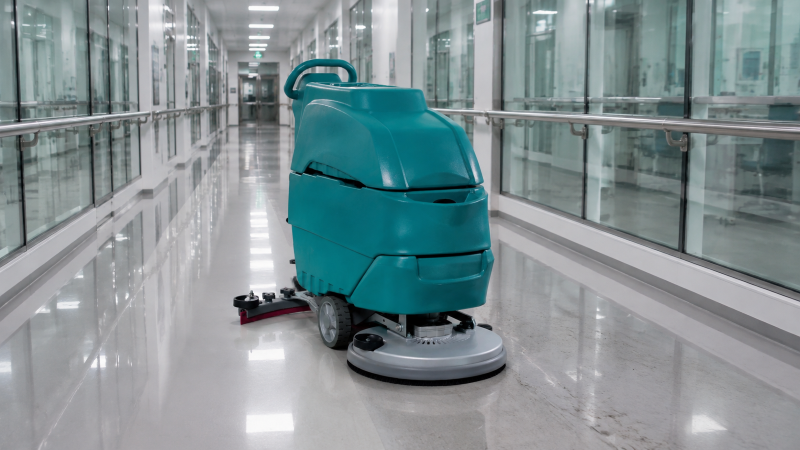
Rule of thumb for epoxy: use soft to medium brushes only. Never use aggressive pads (black stripping pads) or wire brushes. Disc brushes with soft nylon bristles work best. Keep brush pressure at 20-30 kg, not the 40-50 kg you would run on bare concrete.
Soft red pads (3M 5100 or equivalent) are the safest option for daily epoxy cleaning. They clean the surface film without abrading the topcoat. For stubborn scuff marks, a medium white pad works, but only in spot-cleaning mode with the machine moving slowly. High-speed burnishing is a separate topic entirely and requires dedicated equipment, not a scrubber.
Safe for all epoxy. Dilute at 1:128 for daily cleaning. Won't soften or discolor the coating.
Use sparingly for oil stains. Dilute 1:64. Rinse with clean water afterward. Prolonged contact dulls the gloss.
Never use on epoxy. Acids etch the resin surface and cause permanent clouding.
Avoid. Xylene, acetone, and similar solvents dissolve epoxy. Even citrus-based degreasers can soften the topcoat.
Water temperature matters too. Keep solution below 40°C (104°F). Hot water above 60°C can soften epoxy temporarily, making it more vulnerable to brush abrasion during the cleaning pass. Most scrubbers draw from a cold water tap, so this is usually not an issue, but if you use a solution heater, keep it low.
| Epoxy Floor Area | Recommended Machine | Cleaning Path | Productivity |
|---|---|---|---|
| Up to 25,000 sq ft | TerraScrub A3 (walk-behind) | 21 in (530mm) | 2,200-2,400 m²/h |
| 25,000-80,000 sq ft | TerraScrub A5 (compact ride-on) | 21 in (530mm) | 2,700 m²/h |
| 80,000+ sq ft | TerraScrub C80 (autonomous) | 20 in (510mm) | 2,040 m²/h |
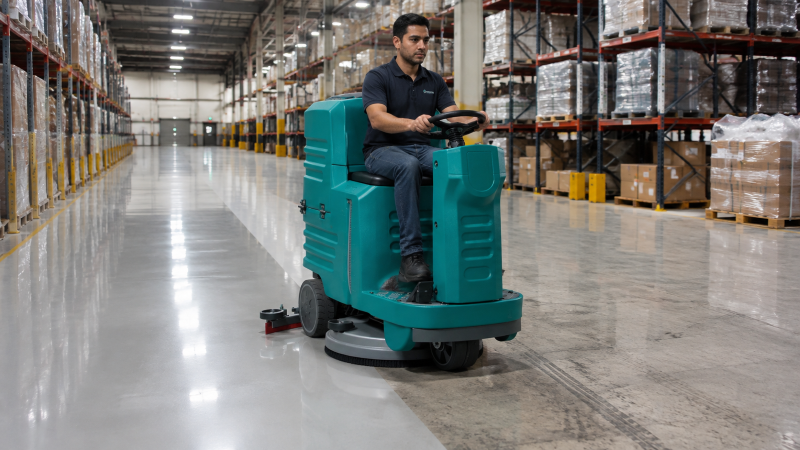
The TerraScrub machines lineup has options for every epoxy floor size. The A3 walk-behind at 50in × 22in × 43in is ideal for smaller epoxy areas like laboratories, pharmaceutical cleanrooms, and food processing rooms. Its single 21-inch disc brush runs at controllable pressure, and the parabolic squeegee recovers solution immediately, leaving the epoxy virtually dry.
Walk-Behind vs Ride-On vs Autonomous for Epoxy Floors
Your epoxy floor is under 25,000 sq ft, or you have tight aisles, doorways, or ramps. The A3 at 2,400 m²/h gives the operator full control over speed and pressure, which matters on delicate epoxy. A 50L solution tank covers about 3,000 m² per fill at 1:128 dilution.
Your epoxy floor is between 25,000 and 80,000 sq ft. The A5 at 2,700 m²/h with a 21-inch brush and 65L/75L tanks fits through standard freight elevators (50in × 24in × 41in). Its compact footprint makes it the go-to for multi-floor epoxy facilities where you need to move the machine between levels.
Your epoxy floor exceeds 80,000 sq ft, or you need consistent cleaning pressure without operator variation. The C80 driverless floor scrubber at 46in × 23in × 48in uses LiDAR and vision navigation to clean autonomously. Its 510mm brush applies steady, pre-set pressure every pass, which is exactly what epoxy needs. No operator fatigue means no accidental pressure spikes that scratch the coating.
After every shift, wipe down the squeegee blade with a clean cloth. Epoxy dust is fine and sticky; it builds up on the blade edge and causes streaking. Check the blade for nicks weekly, because a torn squeegee leaves solution trails on the glossy surface and they are immediately visible.
Replace soft brushes every 400-600 hours on epoxy (they last longer than on concrete because the surface is smoother). Never switch a brush from concrete duty to epoxy duty without deep-cleaning it first. Trapped concrete grit in the bristles will scratch the epoxy coating on the first pass.
Follow ISSA cleaning industry standards for daily maintenance checklists and dilution ratio verification. ISSA provides training certification programs that cover chemical handling, equipment care, and floor-specific cleaning protocols. The TerraScrub insights library also has maintenance schedules and chemical selection guides for each floor type.
Not sure which TerraScrub model fits your epoxy floor? Tell us your floor area, epoxy type (self-leveling vs. coating), and daily traffic level. Donnie will recommend the right machine, brush hardness, and chemical plan to keep your epoxy glossy without scratches.
Email Donnie: Donnie@terrascrubx.com
WhatsApp: +86 166 0187 1755