Every factory that runs 5S eventually discovers the same thing: the floor is where the system gets tested. Sorting and straightening workstations is easy. The floor, on the other hand, is cleaned once, praised in a meeting, and then quietly forgotten until the next audit. That's a mistake, because in 5S the floor is the most visible part of the workplace — and cleaning it properly is the part of Seiso that separates factories that talk about 5S from factories that actually run it. This guide covers how floor cleaning fits into 5S, how to set standards that survive a shift, and how to keep the floor passing audits without a full-time cleaning army.
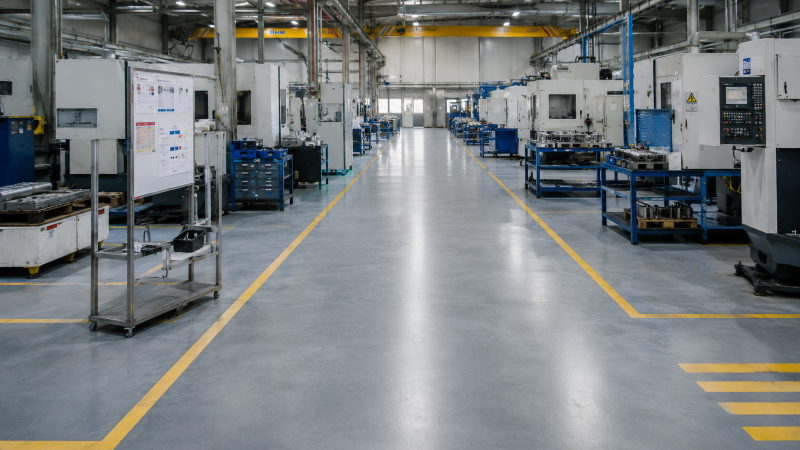
5S has five steps, and the floor touches four of them:
Think of the floor pass as the daily inspection that finds problems before they become expensive. That's the real value of Seiso.
A written standard is what makes 5S work, and floors are no exception:
| Zone | Standard | Frequency |
|---|---|---|
| Production aisles | No visible dirt, marks readable | Daily |
| Machine zones | No coolant or oil puddles | Daily, plus spill response |
| Storage and staging | No buildup under racks | Weekly |
| Dock and entrances | No tracked mud or oil | Daily |
These frequencies follow the same traffic logic as our warehouse cleaning frequency guide — written standards, adjusted by what the floor actually looks like.
5S assigns every zone to a person or team. Floors fail when they belong to everyone, which is the same lesson our 3PL guide makes for logistics. Put a name on each floor zone — a shift team for the aisles, a maintenance person for the machine zones — and write the name on the 5S board. Ownership is what turns a standard from a poster into a habit.
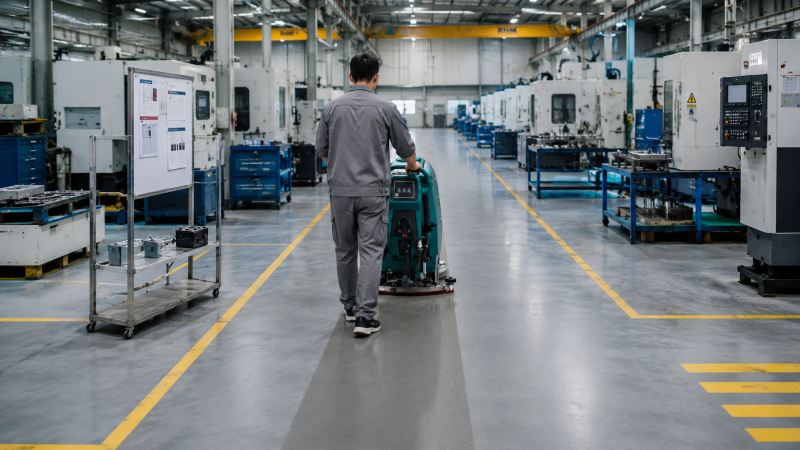
If the daily floor pass takes an hour, it won't happen daily. Keep it short and let the machine work:
The minutes-per-1,000-square-feet measurement from our labor cost guide tells you whether the pass is realistic for the time you have.
Aisle lines and safety zones are the visual language of 5S, and cleaning can destroy them. Two rules:
Auditors walk the floor before they open a drawer. What they check on floors:
All four are daily-pass problems, not audit-week problems. If a stain has already set in, the fixes in our oil stain guide and spill response guide clear it before the visit.
Yes. It's the heart of Seiso (Shine), the third S. In 5S, cleaning doubles as inspection — you notice leaks, wear, and problems while you clean.
The assigned owner of each zone, per 5S rules. Put names on the board and train those people on the machine — ownership is what makes the standard stick.
Daily for production aisles, machine zones, and docks; weekly for storage and staging. Adjust by traffic — the standard should match reality, not the other way around.
Use the right brush for painted floors and keep the concrete sealed. Aggressive brushes and unsealed concrete are what lift paint and fade lines.
Floor cleaning is the most visible part of 5S, and it's the part that gets skipped. Write the standards, assign owners, keep the daily pass short, and protect the markings — then the floor passes audits and, more importantly, keeps the factory safer and cleaner every day. The A3 walk-behind and A7 ride-on are the workhorses for the daily pass, and the routines in our streaks guide keep the results audit-ready.
Contact TerraScrub
Email: Donnie@terrascrubx.com
WhatsApp: +86 166 0187 1755
No. 600, Jiye Road, Sheshan Town, Songjiang District, Shanghai, China