Every factory and warehouse has spills, and the difference between a ten-minute problem and a permanent stain or a safety incident is how fast someone reacts. Oil from a hydraulic line, coolant from a machine, a knocked-over chemical jug — each one needs a slightly different response, but they all follow the same order: stop it spreading, soak it up, clean it, dry it, and fix what caused it. This guide covers the step-by-step routine and the differences between the spills you'll actually see on an industrial floor.
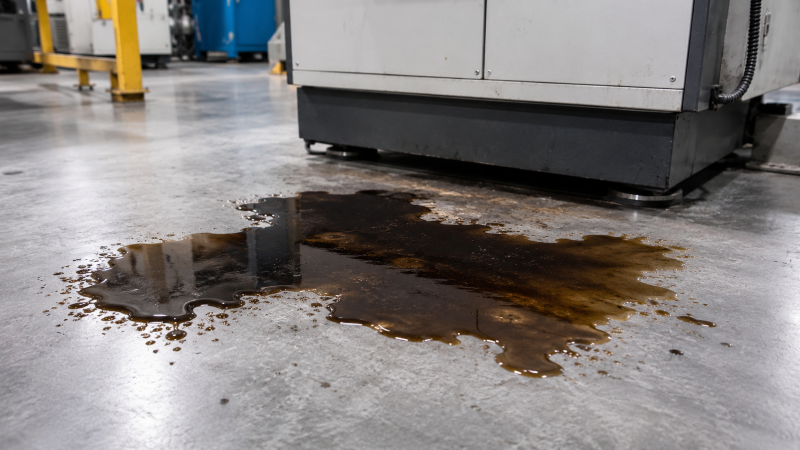
Three things get worse the longer a spill sits:
A spill kit within arm's reach of the machines and dock beats one locked in the supply closet. Keep it simple:
Put cones or signs around the spill and tell people not to drive through it. The few seconds this takes prevent tracking and keep forklifts out of the mess.
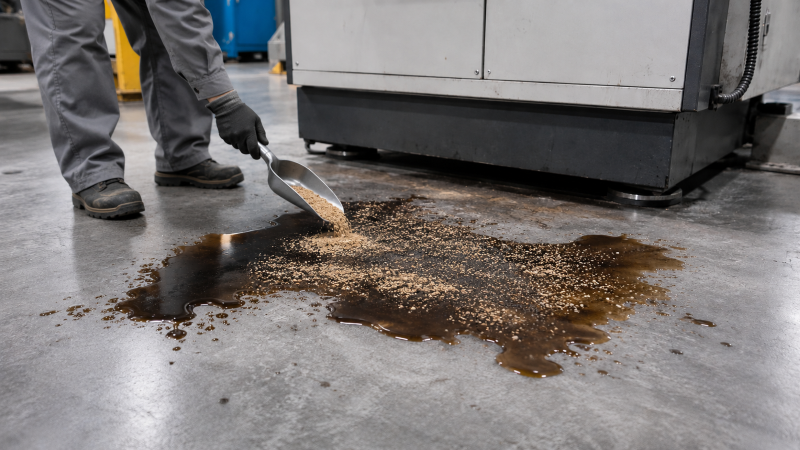
Stop the spill from spreading first — surround it with absorbent, then cover it. Leave the absorbent on for a few minutes so it can soak up the liquid. Sweep it up and repeat if the floor still looks wet.
Most spills leave a film behind. For oil and coolant, that means a degreaser and a scrub — on a large area, a floor scrubber with a disc brush does it fast and recovers the water in the same pass. For chemical spills, follow the SDS sheet for the specific product; that's the document that tells you what's safe to use.
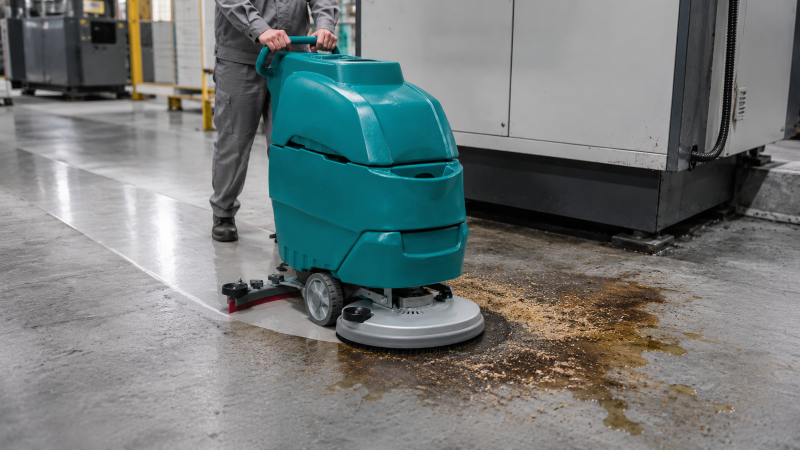
A dry floor is a safe floor. Once it's dry, check whether a stain is already forming. If it is, treat it while it's fresh — the oil stain guide has the process.
A spill you clean up today will be back tomorrow unless the leak gets fixed. Log the spill, report the source, and put drip trays or containment under the leak until it's repaired. Our troubleshooting guide is a good starting point if the leak is coming from the equipment itself.
| Spill | Absorb with | Then clean with |
|---|---|---|
| Oil and hydraulic fluid | Granules or pads | Degreaser + disc brush scrub |
| Coolant | Pads | Water rinse + scrubber pass |
| Chemicals | Per the SDS sheet | Per the SDS sheet |
| Food, dust, and dry spills | Broom or dry vacuum | Wet pass if a film remains |
For large spills, a ride-on scrubber like the A7 recovers the liquid fast, and a walk-behind like the A3 handles the everyday pass. For chemical and hazmat spills, check whether your facility's response plan requires trained personnel — EPA's emergency response resources are a good starting point.
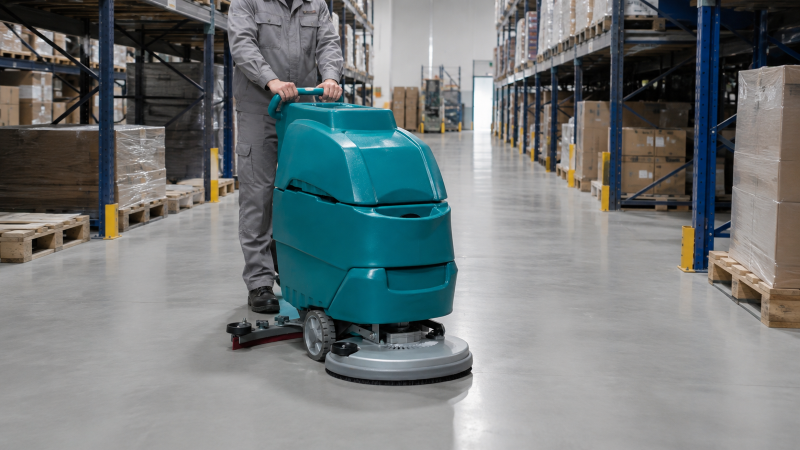
Block it, cover it with absorbent, wait a few minutes, sweep it up, then scrub the residue with a degreaser and rinse. On a large spill, a floor scrubber with a disc brush does the last two steps in one pass.
After the bulk is absorbed, yes. The machine scrubs the residue and recovers the dirty water in the same pass. Don't run a scrubber through a large pool of liquid before absorbing — that overwhelms the recovery tank and spreads the mess.
Absorb it with pads, rinse with clean water, and run a scrubber pass to recover the water. Coolant stains less than oil, but it's slippery and should be treated just as fast.
Absorbent pads and granules, a brush and dustpan, cones or signs, and a low-foam degreaser. For chemical handling, keep the relevant SDS sheets with the kit.
Spills are inevitable; stains and accidents aren't. Block the area, absorb the liquid, scrub the residue, dry it, and fix the source. Keep a spill kit where spills happen, and let the machine handle the large ones — the A3 walk-behind for daily passes and the A7 ride-on when the mess is big. Combined with the tire mark guide and the streaks guide, your floors stay clean and safe through the shift.
Contact TerraScrub
Email: Donnie@terrascrubx.com
WhatsApp: +86 166 0187 1755
No. 600, Jiye Road, Sheshan Town, Songjiang District, Shanghai, China