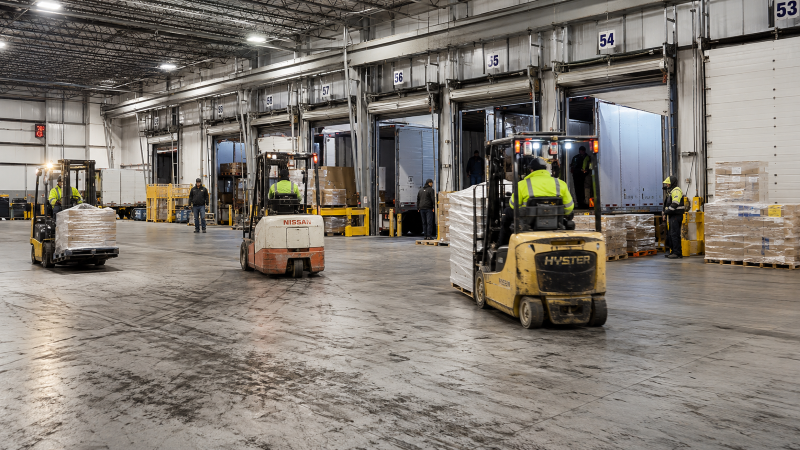
3PL warehouses have a floor cleaning problem that most facilities don't: nobody owns it. The dock runs around the clock, trailers come and go all day, clients walk the floor during audits, and the cleaning crew that existed when the building opened quietly disappeared into the shipping schedule. But in a 3PL, the floor is part of the service you're selling. A dirty dock or a scuffed aisle is visible proof of how the building is run. This guide covers how to set a floor standard, protect the zones that take the most abuse, and keep a cleaning operation running alongside 24/7 shipping — not instead of it.
"Keep it clean" isn't a standard, it's a hope. Write down what each zone should look like and how often it's checked:
| Zone | Standard | Frequency |
|---|---|---|
| Dock and truck bays | No standing oil or tracked mud | Daily |
| Main aisles | No visible tire marks or dirt lines | 2–3 times a week |
| Storage and racking | Presentable, no buildup | Weekly |
| Office and break areas | Clean daily | Daily |
The frequency logic is the same as our cleaning frequency guide — adjust by actual traffic, not by habit.
The machine count for your square footage is the same math as our warehouse sizing guide, and the labor cost side is in our cost guide.
Clients audit more than inventory accuracy. A walk through the building is part of the review, and the floor is the first thing they see. Two habits keep audits stress-free:
Someone has to own it. Assign one person per shift to the floor pass, or it quietly disappears into the shipping schedule. Ownership is the difference between a clean building and a floor that "gets handled when there's time."
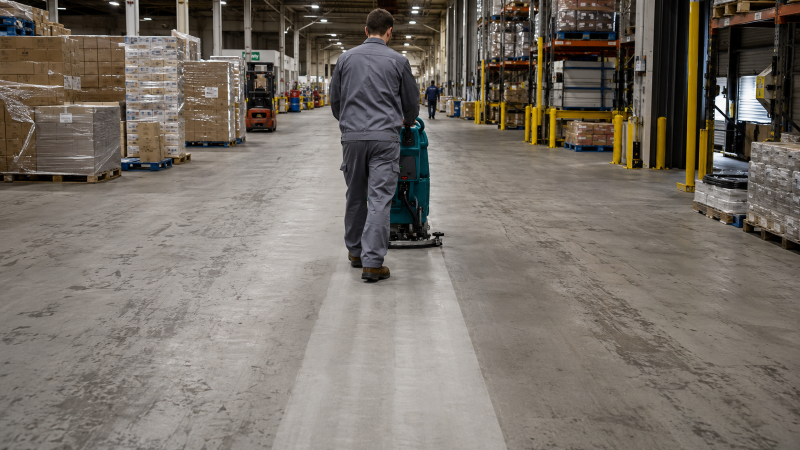
Clean in gaps: dock between trailer changes, aisles between waves of picking. Keep machines charged and ready on every shift, and use quick passes instead of waiting for a full building shutdown.
Enough that a charged machine is available every shift. Start with the sizing math in our warehouse sizing guide, then add one for charging rotation in a 24/7 operation.
Tire marks, oil drips, and tracked-in dirt at the dock. All three are fixable fast when they're fresh — the problem is only ever letting them build up.
In a 3PL, the floor is part of the product. Assign ownership, set a written standard per zone, keep machines charged on every shift, and clean the dock daily. The equipment that fits the job — an A3 walk-behind, an A7 ride-on, and a sweeper for the apron — plus the routines in our loading dock guide and peak season guide cover the building from the dock to the last aisle.
Contact TerraScrub
Email: Donnie@terrascrubx.com
WhatsApp: +86 166 0187 1755
No. 600, Jiye Road, Sheshan Town, Songjiang District, Shanghai, China