Peak season is when warehouse floors take the most damage and get the least attention. Truck volume doubles, shifts run longer, and the cleaning schedule — the one that worked all year — quietly disappears because nobody can spare the downtime. By February the floor looks like it aged five years. It doesn't have to go that way. With a little prep before the rush and a triage routine during it, you can come out of peak season with a floor that's dirty but not damaged. This guide covers all three phases: before, during, and after.
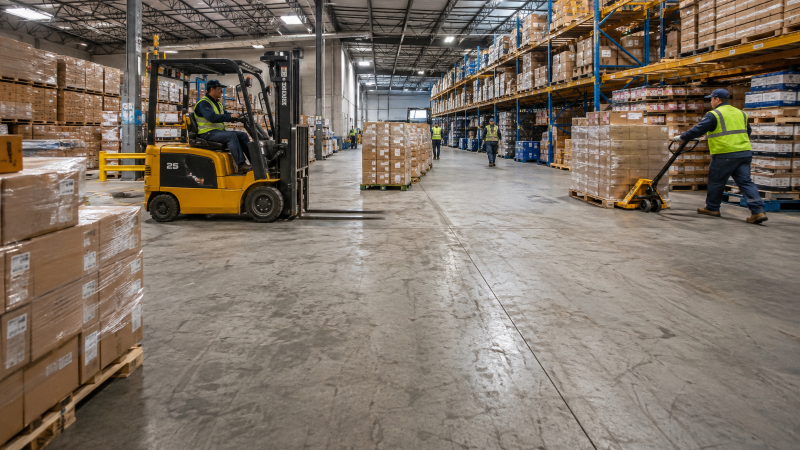
Three things change at once:
The result is dirt that turns into stains and wear that turns into damage. The fix is a plan that expects peak season instead of being surprised by it.
You won't have time for the full routine, so protect the three places that cause the most damage:
Defer the deep work — full building passes, stain stripping, sealing — to after peak. Trying to do everything mid-rush guarantees none of it gets done well.
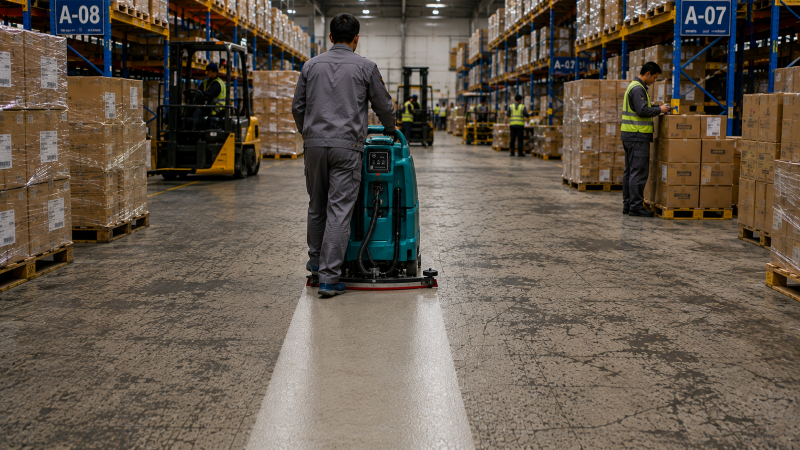
Peak season runs on short windows, so make the machine do the work:
The time math — minutes per 1,000 square feet — is the same one from our labor cost guide, and it tells you exactly how much floor one short window can cover.
Use the short windows between shifts and protect the high-impact zones — dock and main aisles — daily. Deep cleaning waits until after peak. A machine parked and charged near the dock makes the 10-minute pass realistic.
Stop full-building deep cleans and stop trying to strip stains mid-rush. Those are after-peak jobs. Keep the daily triage going and you'll protect the floor where it matters.
Only if the floor stays busy after peak. If it's a seasonal spike, a well-maintained walk-behind used in short daily windows is usually enough. If the rush is becoming year-round, the cost guide helps you decide whether the time saving pays.
Sweep the apron before trucks arrive, keep scraper mats in place, and seal the dock floor. More traffic makes sealing more valuable, not less.
Peak season doesn't have to wreck the floor. Seal and service before the rush, protect the dock and aisles daily during it, and recover with a deep clean after. The machines that make it work are the A3 walk-behind, the A7 ride-on, and a sweeper for the apron — and the plan is the same one in our cleaning frequency guide, compressed to fit the busy months.
Contact TerraScrub
Email: Donnie@terrascrubx.com
WhatsApp: +86 166 0187 1755
No. 600, Jiye Road, Sheshan Town, Songjiang District, Shanghai, China