Vinyl and linoleum are resilient floors — softer than concrete, sensitive to harsh chemicals, and quick to show scratches. The right scrubber keeps them clean without wearing down the finish. Here is what to pick and why.
Vinyl and linoleum floors show up in hospitals, schools, retail stores, and office lobbies because they are affordable, durable, and quiet underfoot. But they are not concrete. Push a heavy machine with stiff brushes and high-alkaline detergent across them every day, and within a year the wear layer starts looking cloudy, scratched, and dull. The right floor scrubber for vinyl and linoleum floors uses soft brushes, controlled water flow, and neutral-pH chemistry to lift soil without stripping finish. This guide breaks down what matters — brush pressure, chemical compatibility, water temperature, and machine size — so you can match the right TerraScrub model to your facility
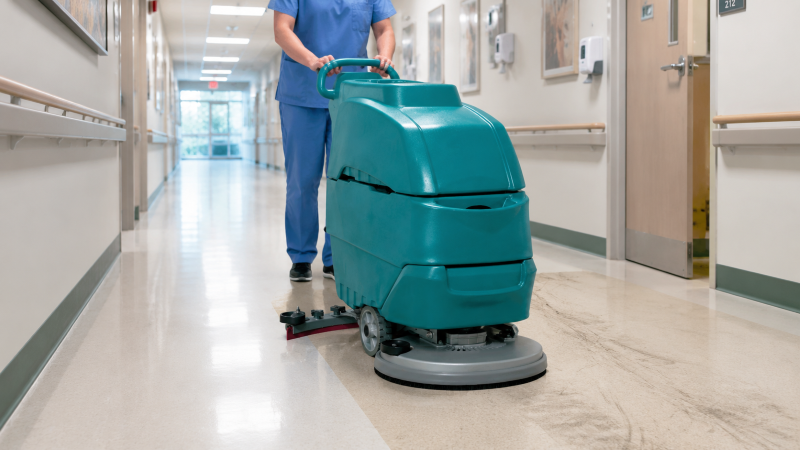
Both are "resilient" floors, meaning they have slight give underfoot. But their chemistry is opposite. Vinyl is synthetic PVC with a polyurethane wear layer — water-repellent, resistant to most acids and alkalis, but vulnerable to abrasion. Linoleum is natural: linseed oil, cork dust, and wood flour on a jute backing. That natural composition makes it sensitive to high-pH cleaners, standing water, and temperatures above 35°C.
Quick test: If you are not sure which floor you have, check installation records. Using a vinyl-safe alkaline cleaner on linoleum can yellow the surface within weeks.
The CDC reports that in 2020, 805 workers died from falls and 211,640 suffered injuries requiring days away from work, costing an estimated $70 billion annually in workers' compensation and medical expenses. Contaminants on the floor — water, grease, chemical residue — are a primary cause. A scrubber that leaves floors dry immediately eliminates that slip risk, which is why squeegee performance matters more on resilient floors than anywhere else.
Concrete floors handle 30-50 kg of brush pressure without complaint. Vinyl and linoleum do not. Push that hard and you start scratching the wear layer, which traps dirt and accelerates dulling. For resilient floors, target 15-25 kg of down pressure with soft nylon or polypropylene brushes. The goal is to agitate the cleaning solution, not grind the floor.
Daily cleaning on sealed vinyl and linoleum. Lifts light soil and scuff marks without scratching. Replace every 400-600 operating hours.
Periodic deep cleaning on vinyl only. Not recommended for linoleum — the stiffer bristles can score the natural surface.
The single most common mistake facility teams make is grabbing one "heavy duty" cleaner for every floor type. On vinyl, alkaline cleaners above pH 10 can soften the polyurethane wear layer over time. On linoleum, anything above pH 9 risks yellowing and embrittlement. Acidic cleaners are worse — they can break down the linseed oil binder.
Use a neutral pH cleaner (pH 7-8) for daily maintenance. Dilute at 1:128 for routine cleaning, 1:64 for heavier soil. A 50L solution tank at 1:128 dilution covers roughly 3,000 m² before refilling. According to ISSA cleaning standards, proper dilution alone can cut chemical residue by up to 40%, which means fewer streaks and less re-soiling between cleanings.
Resilient floors — especially linoleum — hate standing water. Seams loosen, adhesive degrades, and edges curl. A scrubber's squeegee system needs to recover 95%+ of the solution it lays down. If the floor is wet for more than 30 seconds behind the machine, the squeegee blade is worn, misadjusted, or the wrong profile for that floor texture.
Watch out: Textured vinyl (embossed to look like wood or stone) traps water in the texture grooves. Standard flat squeegee blades skim over the high spots and leave water pooled in the low spots. Use a notched or contoured squeegee blade for textured vinyl, and slow down 20% to give the vacuum time to recover solution from the grooves.
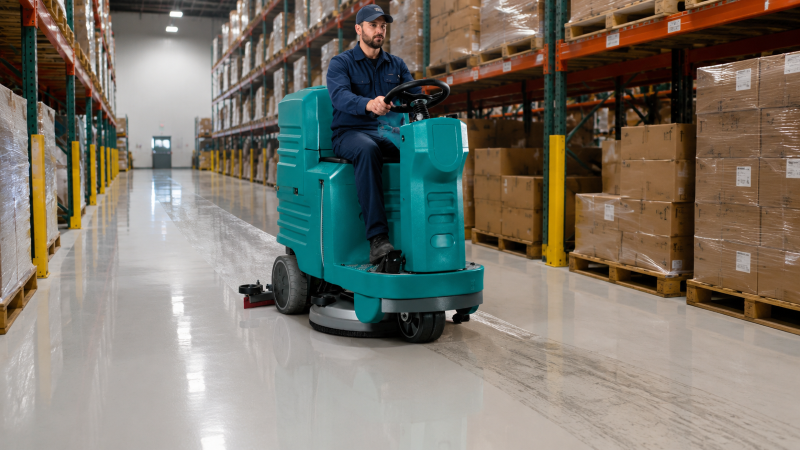
The right floor scrubber for vinyl and linoleum depends on square footage, aisle width, and whether the floor is on one level or split across floors needing elevator access. Here is how the TerraScrub lineup maps to typical resilient floor environments:
The A3 walk-behind is the pick for tight spaces — exam rooms, retail aisles, corridors under 4 feet wide. At 50in × 22in × 43in, it fits through any standard door and its 50L solution tank covers about 3,000 m² per fill. The brush pressure is adjustable down to 15 kg, which is exactly what linoleum needs.
The A5 compact ride-on handles larger facilities where walking behind a machine for 4 hours is not realistic. Same 21-inch cleaning path, but the operator rides — so productivity jumps to 2,700 m²/h. At 50in × 24in × 41in, it still fits freight elevators, which matters for multi-floor hospitals and schools. The 65L solution tank extends runtime to cover roughly 4,000 m² per fill.
A consistent schedule extends resilient floor life by years. Here is what that looks like in practice:
Daily: Dust mop or vacuum entries and high-traffic paths before running the scrubber. Grit acts as sandpaper under brushes. Run the A3 or A5 with neutral pH cleaner at 1:128 dilution. Walk-off mats at entrances (10-12 feet deep) catch 80% of incoming dirt before it reaches the floor.
Weekly: Full scrub with 1:64 dilution for heavier soil. Pay attention to edges and corners where the squeegee cannot reach — these need manual detailing. Inspect squeegee blades for nicks and tears.
Monthly: Check brush wear. Replace when bristles are 50% worn. Inspect solution filter for clogs. On linoleum, assess whether the protective polish needs refreshing — typically every 3-6 months depending on traffic.
Quarterly: Evaluate slip resistance. If the floor feels tacky or looks cloudy, chemical residue is building up. Run a rinse-only pass with clean water to remove buildup, then return to normal dilution.
Most floor damage we see in the field comes from three preventable errors. First, using one chemical for every floor — the "universal cleaner" that works on concrete will yellow linoleum in months. Second, skipping the daily dust mop so grit gets ground into the wear layer under the brush. Third, letting the solution tank run dry, which means the brushes are polishing dry dirt into the floor instead of suspending it in solution.
The fix is simple: match your chemical to your floor type, dust mop before scrubbing, and keep the solution tank topped up. A TerraScrub A3 or A5 with the right brush and neutral pH cleaner will keep vinyl and linoleum looking new for 10-15 years. The wrong setup can cut that lifespan in half.
Need help matching a scrubber to your vinyl or linoleum floors? TerraScrub builds machines for resilient floor care — adjustable brush pressure, controlled solution flow, and squeegee systems that leave floors dry in seconds.
Email Donnie: Donnie@terrascrubx.com | WhatsApp: +86 166 0187 1755