Zone-based scrubbing strategies, shift-change protocols, and equipment picks for manufacturers who cannot afford downtime
Factory floors collect oil, grease, metal dust, and forklift tire marks faster than any other commercial environment. Most plants deal with it by shutting down a line for an hour or scheduling a weekend deep clean. That costs production time. The alternative is zone-based cleaning: divide the floor into manageable sections, run a scrubber through each zone during shift changes or low-traffic windows, and keep the squeegee tight enough that the floor is dry before the next forklift rolls through. The right machine, the right chemical, and a 15-minute window per zone are all you need. This guide covers zone mapping, equipment selection for different aisle widths, chemical choices for oil vs. food production areas, and a shift-change cleaning schedule that keeps lines running.

Manufacturing contributes over $1 trillion to U.S. GDP and employs roughly 5 million people, according to the National Association of Manufacturers. Every minute a production line sits idle, that output drops. Yet floor cleaning is often treated as an all-or-nothing event: shut everything down, hose it out, wait for it to dry, restart.
The problem is that debris accumulates continuously. Metal shavings from machining centers track into walkways. Hydraulic oil leaks create slip zones. Forklift tires grind dust into the coating. By the time the scheduled shutdown arrives, the floor has been unsafe for days.
OSHA's walking-working surfaces standard (29 CFR 1910.22) requires employers to keep working surfaces clean, dry, and free of hazards. Waiting for a weekly shutdown to clean is not compliance. It is a citation waiting to happen.
The first step is to stop thinking of the floor as one surface. Break it into zones based on soil type, traffic level, and when each zone can tolerate a cleaning pass. A typical manufacturing facility has at least three distinct zones, each needing a different approach.
Oil, metal shavings, coolant splash. Narrow aisles between machines. Clean during operator breaks or changeover.
Forklift tire marks, pallet dust, packaging debris. Wide aisles, high traffic. Clean during shift change or lunch.
Dirt, rain water, truck oil. Heavy soil, intermittent traffic. Clean between truck schedules.
Number each zone on a floor plan and assign it a cleaning day and window. Post the schedule near the supervisor station. When operators can see that Zone A gets cleaned Tuesday at 10:15 (during changeover), they stage materials accordingly and the cleaning pass takes 12 minutes instead of 30.
Machine size matters more than machine count. A ride-on scrubber that covers 5,500 m²/h is useless if it cannot fit between two production lines. Match the machine to the aisle.
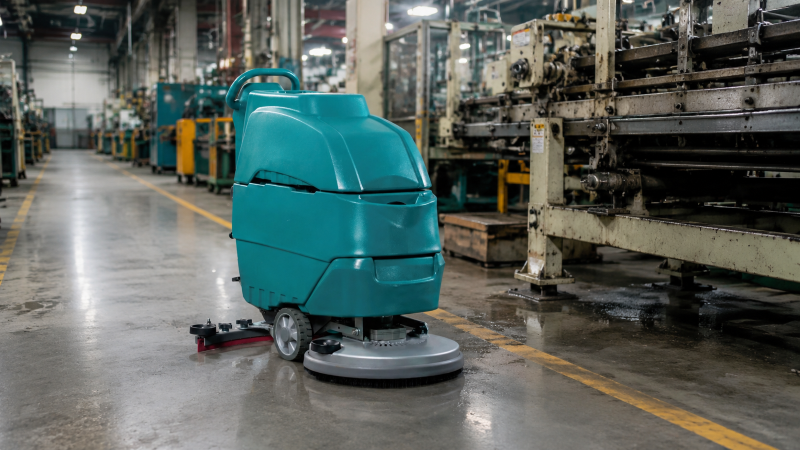
For tight production areas with aisles under 1 meter, the TerraScrub A3 walk-behind is the right pick. At 530mm cleaning width and 127cm length, it threads through gaps that a ride-on cannot enter. Brush pressure is adjustable from 10 to 30 kg, so you can dial it down for sealed floors or crank it up for oil-stained concrete.
For wide warehouse aisles and open production floors, the TerraScrub A7 ride-on covers 5,500 m²/h with an 860mm deck. The 140L clean and 150L recovery tanks mean fewer refill stops, and the parabolic squeegee recovers water immediately. The floor is dry before the machine passes the next rack.

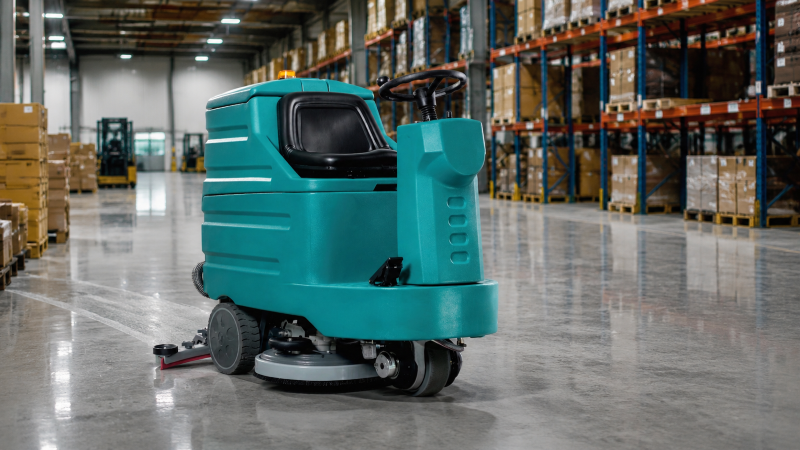
Run the A7 through wide aisles during the 15-minute shift change. Most warehouse zones can be covered in two passes per aisle, one forward and one back. The floor is dry within 45 seconds of the squeegee passing.
For a broader comparison of scrubber options across concrete floor types commonly found in factories, see our concrete floors buyer's guide.
Factory floors are not all the same. The chemical that cuts hydraulic oil in a machine shop will damage a food-grade coating in a packaging area. Match the cleaner to the soil.
For heavy oil and grease zones, use an alkaline degreaser diluted per manufacturer instructions. pH 9-11 is typical. Let the solution sit on the floor for 2-3 minutes before the scrubber passes over it. The dwell time matters more than brush pressure.
For food production areas, use an EPA Safer Choice-certified neutral cleaner. pH 7-8 will not damage epoxy or polyurethane coatings. Avoid anything with citrus solvents on sealed floors; the citrus oil can soften the finish over time.
Never mix degreaser and sanitizer in the same tank. The alkaline in the degreaser neutralizes the quat-based sanitizer. Run separate batches or rinse the tank between chemical changes.
The trick is to fold cleaning into existing downtime. Every factory has natural pauses: shift changes, lunch breaks, changeover between product runs. Build the cleaning schedule around those windows instead of creating new downtime.
The schedule above assumes a single-shift operation with one lunch break and one changeover. For two-shift or 24/7 facilities, assign one cleaning pass per shift change and rotate zones so each area gets a full scrub at least every 48 hours.
The biggest risk of cleaning during production is not the machine. It is the operator. Someone who has only cleaned during shutdowns will treat the floor like an empty room. They will leave wet spots in forklift paths, run the scrubber too close to active equipment, and skip zones that "look clean enough."
Train operators on three things: route planning, moisture control, and communication. Route planning means knowing which aisles are active and which are clear. Moisture control means checking that the squeegee is seated properly and the floor is dry before moving to the next zone. Communication means telling the line supervisor when the cleaning pass starts and when it ends.
Give each cleaning operator a two-way radio or plant phone. Before starting a zone, they call the supervisor: "Starting Zone B, aisle 4, ETA 8 minutes." The supervisor confirms the aisle is clear of forklift traffic. When done, they call again: "Zone B clear, floor dry." This takes 10 seconds and prevents the two most common problems: wet floor collisions and missed zones.
Not sure which scrubber fits your factory layout? Tell us your floor area, aisle widths, and soil type (oil, dust, food, chemical). We will recommend the right TerraScrub model, pad type, and cleaning chemical for each zone.
Email: Donnie@terrascrubx.com
WhatsApp: +86 166 0187 1755