Wood and water do not mix. Use the wrong pad, the wrong pH, or leave moisture on the surface too long, and those warm hardwood planks start cupping at the seams.
Quick answer: Use a TerraScrub A3 or A7 with white pads at 12-15 kg brush pressure, neutral pH 7-8 cleaner, and parabolic squeegee for immediate water recovery. Never use black pads or acidic cleaners on wood or laminate.
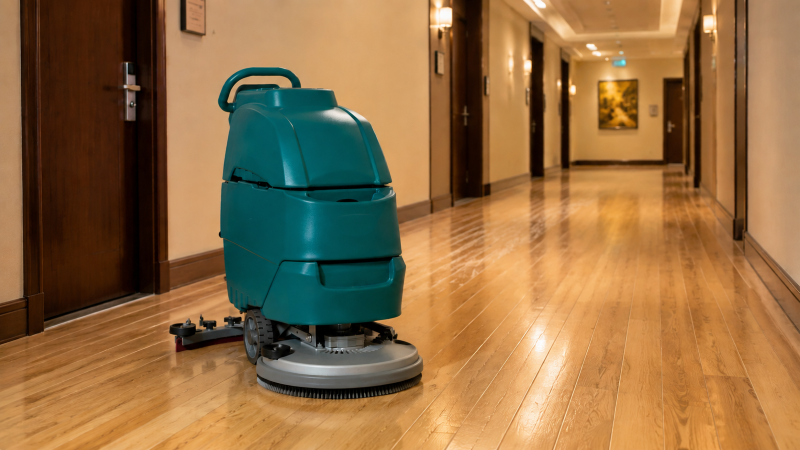
Wood and laminate floors bring warmth to hotel lobbies, retail stores, and office buildings. But they have a complicated relationship with water. Too much moisture and the boards cup and swell at the seams. Too little cleaning and dirt gets ground into the finish. The right floor scrubber for wood and laminate floors uses soft pads at low pressure, neutral-pH cleaner, and a squeegee that recovers water fast enough to leave the surface dry within seconds. This guide covers pad selection, moisture control, chemical pH, and which TerraScrub models match different wood floor environments.
Hardwood flooring expands and contracts with humidity changes. The finish, whether polyurethane, aluminum oxide, or wax, provides a protective layer but is not waterproof. Laminate flooring has a fiberboard core that swells permanently if water penetrates the seams. The National Wood Flooring Association recommends keeping wood floor moisture exposure to an absolute minimum and using cleaners specifically formulated for wood finishes. A floor scrubber that deposits too much solution or fails to recover it fully will damage both solid wood and laminate over time.
Using a standard floor pad on wood? Check the color first. Black pads scratch polyurethane finishes. Green pads dull aluminum oxide coatings. When in doubt, test on a small corner before running the full route.
The pad you choose matters more than the machine itself. White pads are the safest option for daily cleaning on finished wood. Beige pads work for slightly heavier soil without damaging the finish. Never use black stripping pads, and avoid any pad rated above 1,000 grit equivalent. If your facility has laminate flooring with textured surfaces, a soft nylon brush can reach into the embossed grain pattern without scratching the wear layer. For related guidance on resilient floor types, see our vinyl and linoleum floor scrubber guide.
Wood finishes are sensitive to pH extremes. Acidic cleaners below pH 6 break down polyurethane bonds over time. Alkaline cleaners above pH 10 cloud the finish and leave a residue that attracts dirt. The safe range is pH 7-8, using a wood-specific neutral cleaner or a diluted floor cleaner approved by the finish manufacturer. The EPA Safer Choice program lists certified cleaners that meet safety standards for indoor air quality and surface compatibility. For laminate, avoid any cleaner containing wax, oil, or polish. These leave a film that makes laminate floors slippery and dull.
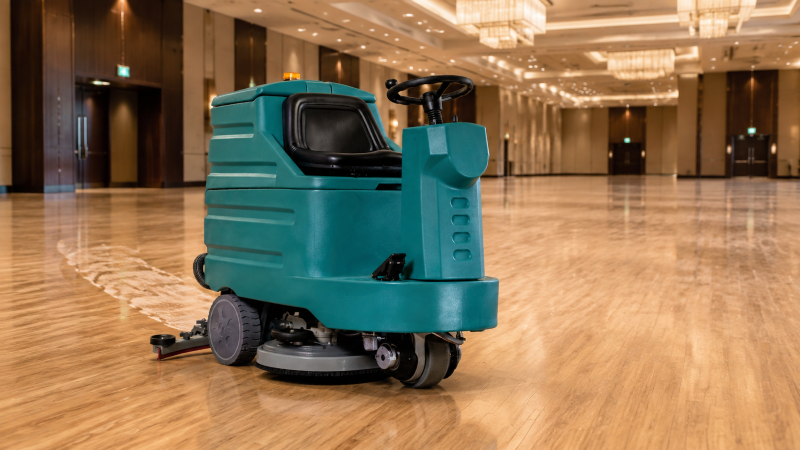
The TerraScrub A3 walk-behind covers 2,200 m²/h with adjustable brush pressure from 10-30 kg. Set it to 12-15 kg with white pads for wood floors. Its 530mm cleaning path fits narrow hotel corridors and retail aisles. The parabolic squeegee recovers water immediately, leaving the surface dry. For larger wood floor areas like convention centers or hotel ballrooms, the TerraScrub A7 ride-on delivers 5,500 m²/h with an 860mm deck. Use white pads at the lowest brush pressure setting and keep squeegee blades in good condition for maximum water recovery.
Not sure which pads or chemicals work best for your wood or laminate floors? Email Donnie or message on WhatsApp. Tell us your floor type, finish, and total area, and we will recommend the right TerraScrub model, pad, and cleaning chemical.
Want a recommendation for your facility? Donnie@terrascrubx.com
WhatsApp: +86 166 0187 1755