
A floor scrubber lasts 5 to 10 years on average. Walk-behind models typically run 7-10 years because they have fewer moving parts and less weight on the frame. Ride-on units average 5-8 years before drive system repairs start adding up. Autonomous scrubbers sit at 4-6 years — the sensors and navigation electronics have shorter service lives than mechanical components. The first thing to go is always the battery (3-5 years for lead-acid, 5-7 for lithium), followed by brushes, squeegee blades, and vacuum motors at predictable intervals you can plan for.
What determines floor scrubber lifespan
Three things decide how long your machine lasts: hours of operation per week, floor conditions, and maintenance discipline. A scrubber running 40 hours a week on rough warehouse concrete ages faster than one used 15 hours on polished tile. Gritty floors eat brushes in 6 months. Smooth epoxy lets them run a full year.
According to ISSA cleaning industry datahttps://terrascrubx.com/machines, facilities that follow a structured preventive maintenance schedule extend equipment life by 30-40% compared to those that only fix things when they break.
Average floor scrubber lifespan by machine type
Here's what you can realistically expect from each type, based on data from TerraScrub's full machine lineup and field reports from facilities running our equipment:
Walk-behind scrubbers: 7-10 years
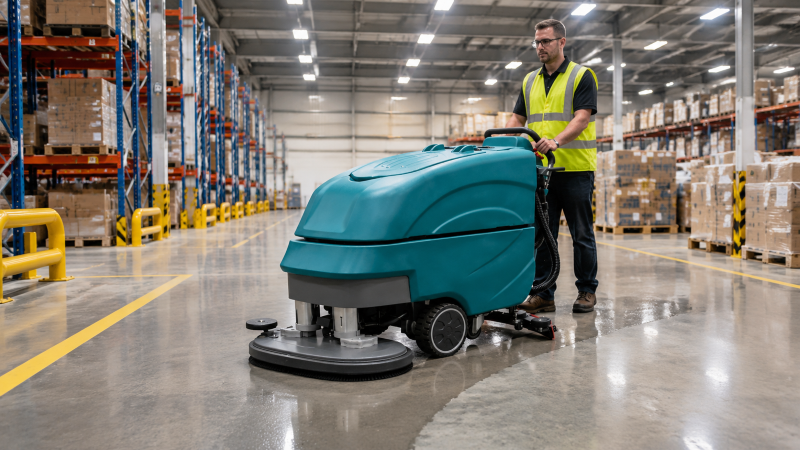
Simpler mechanics, fewer drive components, lighter frame load. A well-maintained walk-behind like the BA860 can hit the 10-year mark with one battery swap and regular brush replacements. Best lifespan-to-cost ratio of any machine type.
Ride-on scrubbers: 5-8 years
More complex — drive motors, traction systems, steering components all wear. Plan for a mid-life overhaul around year 4-5 (brush motors, vacuum motor, squeegee assembly). After year 8, parts sourcing gets harder.
Autonomous scrubbers: 4-6 years
LiDAR sensors, cameras, and navigation boards have shorter service lives than mechanical parts. Software updates can extend useful life, but sensor degradation typically forces replacement around year 5-6.

 Battery
 cycles are the other half of the equation. Lead-acid batteries deliver 800-1,500 charge cycles (3-5 years of daily use). Lithium-ion manages 2,000-3,000 cycles (5-7 years). Brushes last 6-12 months depending on floor abrasiveness. Squeegee blades need flipping at 3 months and replacing at 6.
How to extend your floor scrubber lifespan
Most facilities kill their scrubbers early through neglect, not overuse. The recovery tank sits full of dirty water overnight. The squeegee never gets wiped down. The battery gets charged at 20% instead of 30%. Small habits, big consequences. For more detailed protocols, check out our insights library which covers maintenance schedules, battery charging best practices, and pre-op checklists.
Daily (5 minutes)
Empty and rinse the recovery tank. Wipe down the squeegee assembly. Check brush pressure and solution flow. Charge the battery if it's below 30%.
Monthly (30 minutes)
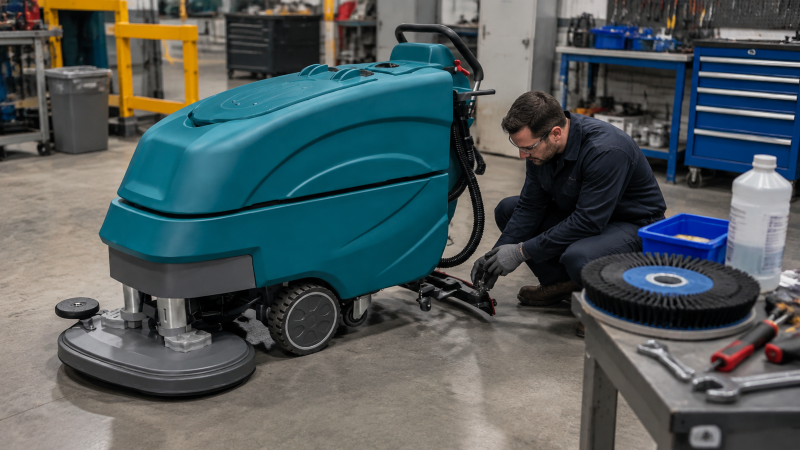
Inspect squeegee blades for tears and flips. Clean the vacuum filter. Check solution lines for leaks or blockages. Tighten any loose fasteners on the brush head and squeegee mount.
Quarterly (2 hours)
Replace worn squeegee blades. Deep-clean both tanks with descaler. Test battery capacity under load. Inspect brush disc bearings and motor brushes. Check the full daily pre-op checklist to make sure your team isn't skipping steps.

When to replace your floor scrubber
Repair costs exceeding 50% of replacement price in a single year is the clearest signal. Other red flags: the battery won't hold a charge through a full shift, replacement parts are getting hard to source, floor cleaning quality has dropped despite new brushes and blades, or the machine spends more time in the repair bay than on the floor.
TerraScrub BA860: built for the long haul
The BA860 walk-behind dual brush scrubber is designed with serviceability in mind. Every component — brush motors, squeegee assembly, solution lines, battery — is accessible without specialized tools. The modular frame means you swap parts instead of scrapping the machine. At 300 kg with a self-propelling 500W traction motor, it handles 4,200 m²/h while keeping operator fatigue low enough for full-shift use.
TerraScrub BA860 Walk-Behind Floor Scrubber
| Spec | BA860BT |
|---|---|
| Type | Walk-behind, dual brush |
| Cleaning width | 860 mm (34 in) |
| Squeegee width | 1,100 mm (43.3 in) |
| Cleaning efficiency | 4,200 m²/h (45,200 ft²/h) |
| Battery | 24V / 200Ah maintenance-free |
| Brush motors | 560W × 2 (dual disc) |
| Traction motor | 500W self-propelling |
| Tanks | 95L clean / 105L recovery |
| Machine size | 150 × 95 × 124 cm (59 × 37 × 49 in) |
| Weight | 300 kg (661 lb) |
Want a lifespan estimate for your specific facility? Tell us your floor type, square footage, and daily cleaning hours — we'll project battery replacement cycles, brush wear intervals, and total cost of ownership over 5 years. Email Donnie at TerraScrub for a custom assessment.