Wisconsin produces over 3.4 billion pounds of cheese a year. Every dairy plant, cheese maker, and meat processor in the state fights the same battle: grease, fat, and protein residue that mops just smear around. This guide covers how industrial floor scrubber machines handle those soils in one pass, which TerraScrub models fit Wisconsin food plant sizes, and what FSMA and 3-A standards demand from your floor cleaning equipment.
Wisconsin has over 1,200 licensed dairy plants. That is a lot of floor space, and most of it gets hit with the same soils day after day: milk fat, whey protein, animal fats, and cleaning chemicals. A mop pushes dirty water around. It does not remove the soil — it redistributes it.
Industrial floor scrubbers work differently. They apply cleaning solution, scrub it into the floor with rotating pads or brushes, and then vacuum the dirty water into a recovery tank. One pass. The floor is clean and dry enough to walk on immediately. That matters in a food plant where wet floors mean slip hazards and potential compliance violations.
If you are preparing for an audit, see how a Wisconsin-area food processing plant passed its SQF audit with a daily sanitizing routine.
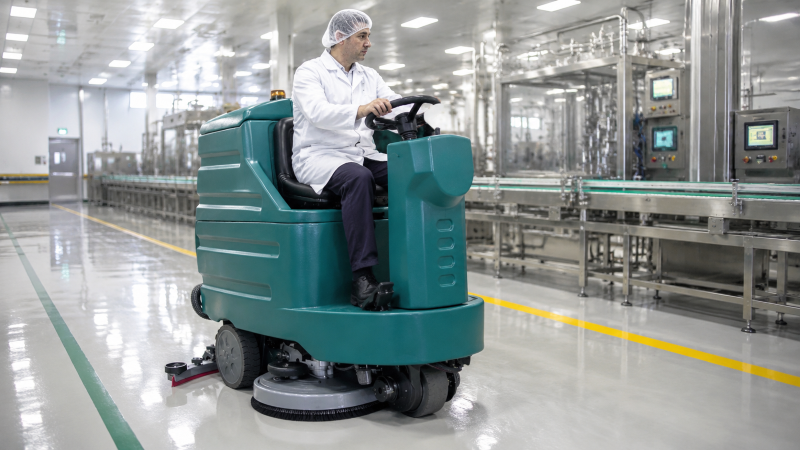
Food plant floors are not like office lobbies. The soil profile is different, and it changes by the hour:
Each of these requires a specific detergent and mechanical action to break down. A mop cannot generate enough friction to lift dried protein films. A scrubber with a cylindrical brush at 200+ RPM can.
Winter brings salt, sand, and meltwater through loading docks. Plants that handle both food production and winter foot traffic need scrubbers that can switch between degreaser and neutral cleaner without changing tanks mid-shift.
For facilities dealing with heavy oil and grease loads year-round, the approach used by a bus depot that removed 90% of oil and diesel grime from maintenance bays applies the same mechanical principle: aggressive brush pressure plus the right chemistry.
Not every food plant needs the same machine. Here is how TerraScrub models break down by facility size:
| Model | Type | Cleaning Width | Productivity | Best For |
|---|---|---|---|---|
| A3 | Walk-behind | 21" | 2,200-2,400 sq ft/h | Small plants under 25,000 sq ft |
| A5 | Ride-on (compact) | 21" | 2,700 sq ft/h | Mid-size plants, 25,000-80,000 sq ft |
| A7 | Ride-on | 34" | 5,500 sq ft/h | Large plants, 80,000+ sq ft |
The A5 ride-on, at 50in × 24in × 41in, fits through standard food plant doorways and navigates between production lines. Its 21-inch cleaning path covers what a mop crew needs three passes to achieve, and the operator rides instead of walks, which means less fatigue and more consistent cleaning pressure across long shifts.
For detailed operator guidance, our step-by-step ride-on floor scrubber operation guide covers everything from pre-start checks to end-of-shift shutdown.
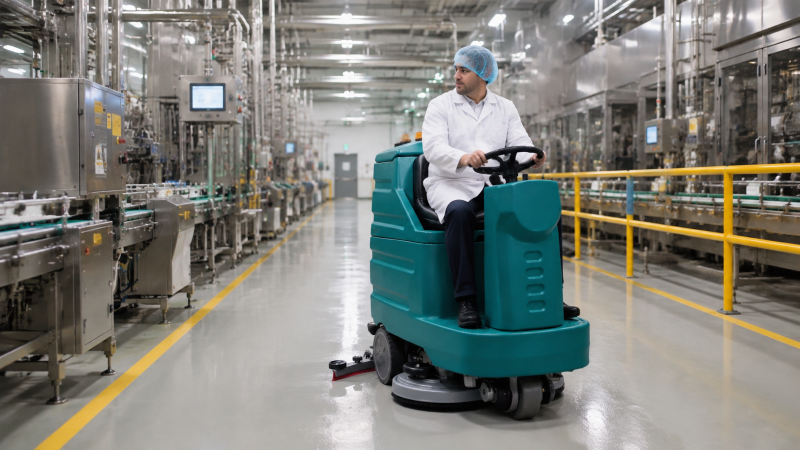
The FDA's Food Safety Modernization Act (FSMA) shifted the focus from responding to contamination to preventing it. Under FSMA's preventive controls rule, food facilities must have written sanitation procedures — and floor cleaning is part of that documentation.
3-A Sanitary Standards go further. They specify that food contact surfaces and adjacent areas must be cleanable. Floor cleaning equipment that leaves residue or standing water does not meet that bar.
TerraScrub machines vacuum dirty water into a sealed recovery tank. No residue. No standing water. The squeegee blade runs the full width of the cleaning path, so what gets scrubbed also gets dried. The floor is walkable the moment the machine passes.
If your current machine is leaving streaks or not picking up water properly, our guide to choosing the best commercial floor scrubber walks through the specs that actually matter for food plant compliance.
Corded machines are a liability in food plants. Cords trail through wet areas, catch on equipment, and create tripping hazards near production lines. Battery-powered scrubbers eliminate all of that.
The TerraScrub A5 runs on a 24V battery system that delivers 3-4 hours of runtime per charge. That is enough to clean 8,000-10,000 sq ft in a single session. The machine operates at under 65 dB — quiet enough to run during production hours without disrupting workers or requiring hearing protection.
Wisconsin's cold storage facilities face an added challenge: sub-zero temperatures that can affect battery performance and squeegee blade flexibility. For those environments, see how a cold storage facility keeps floors safe and dry at -20°F using heated squeegee blades and low-temp degreaser.
A scrubber only works if it is maintained. Daily tasks take about 10 minutes:
TerraScrub machines ship with a 1-year warranty covering parts and labor. We work with dealers across the Midwest, so parts and service support are available without long shipping delays.
For a structured approach to daily start-up procedures, our floor scrubber pre-op checklist gives operators a repeatable routine that catches problems before the shift starts.
TerraScrub builds battery-powered walk-behind and ride-on scrubbers for dairy plants, cheese makers, meat processors, and breweries across the Midwest. Tell us your facility size and floor type — we will match you with the right model and connect you with a dealer near you. Contact Donnie to get started.