
How a Midwest transit authority replaced 6 hours of manual sweeping with one BA1400 ride-on sweeper, clearing 10,000 m² per hour of oil-soaked asphalt, tire debris, and seasonal litter across a 4-acre bus depot.
An Ohio regional transit authority runs 140 buses out of a single depot in Columbus. The 4-acre yard handles fueling, wash bays, and overnight parking. Every morning, the ground crew found oil drips, tire shred, sand tracked in from winter salt, and whatever the wind blew in overnight. Two workers spent six hours sweeping it by hand, and still missed the fine dust that turned slick after the first rain. This case study walks through what happened when they switched to a BA1400 ride-on floor sweeper and cut that job to under an hour.

Why bus depot yards are a sweeper problem, not a scrubber problem
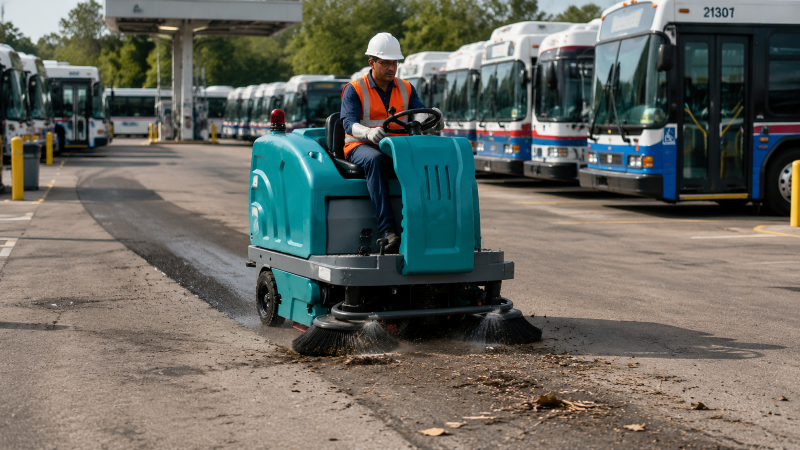
Bus depots are outdoor environments. The surfaces are asphalt and sealed concrete, not polished tile. The contamination is dry: tire particles, sand, leaves, cigarette butts, paper cups. A floor scrubber wets the surface and recovers water. That's the wrong tool here. You need something that sweeps dry debris into a hopper and suppresses dust with a light water spray. For more on matching equipment to the environment, this indoor vs outdoor floor cleaning equipment guide breaks down the distinction.
OSHA classifies outdoor walking surfaces at transit facilities as slip-trip hazard zones when debris accumulates. Oil plus fine dust plus rain equals a surface that sends workers to the ground. Source: OSHA Slips, Trips, and Falls.
The BA1400 is a three-wheeled ride-on sweeper built for outdoor industrial yards. Two side brushes (260mm diameter, 120W each) pull debris from corners and curb lines into the path of a 700mm main brush powered by an 800W motor. A 300W suction system pulls fine dust through a filter, and a 50W dust shaker keeps the filter clean during operation. The 180L water tank sprays a fine mist ahead of the brushes to suppress dust without soaking the surface.
The numbers that matter for a bus depot: 1,400mm cleaning width, 10,000 m²/h coverage, 4-hour continuous runtime on a 48V/100Ah battery, and a 150L dust bin that needs emptying two or three times per shift. At 9 km/h working speed, one operator covers the entire 4-acre yard in roughly 50 minutes.
2 workers × 6 hours = 12 labor hours daily. Fine dust missed. Oil-sand mix left on surface. Slip incidents reported quarterly.
1 operator × 50 minutes = under 1 labor hour daily. Dust suppressed at source. Debris collected in 150L hopper. Zero slip reports in 6 months.

Daily operation and maintenance at the depot
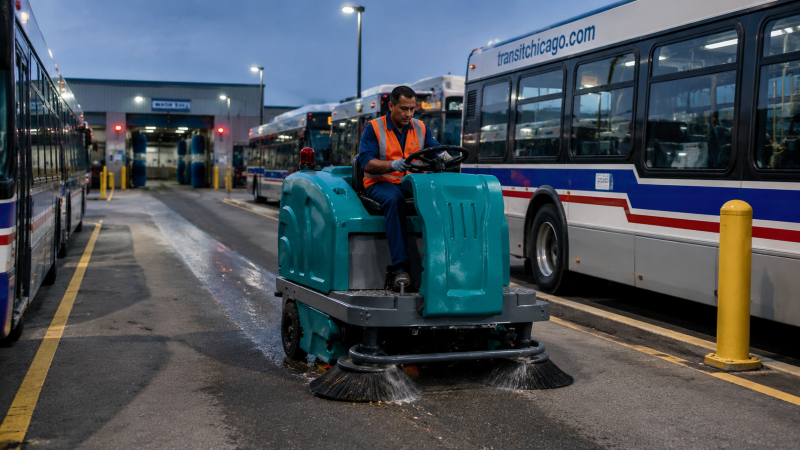
The depot runs the BA1400 at 5:30 AM before the first bus pull-out. One ground crew member drives it through the fueling lane, along the parking rows, and around the wash bay entrance. The three-wheeled chassis turns tight around bollards and bus mirrors. After the sweep, the operator empties the dust bin at the yard's waste station, checks the filter shaker, tops off the water tank, and plugs in the charger. Total post-shift routine: 10 minutes. For a structured approach, this daily pre-op checklist works for sweepers too, with minor adjustments for brush inspection instead of squeegee blades.
Columbus gets 38 inches of rain and 22 inches of snow annually. The depot added the optional rain shelter canopy so the BA1400 can run in light rain without the operator getting soaked. In winter, the machine sweeps salt residue and sand off the yard before it gets tracked into the maintenance building. Summer brings pollen and leaf debris, which the suction system handles without clogging. For facilities dealing with temperature-driven cleaning challenges, this seasonal floor care guide covers scheduling and chemical considerations.
Not every transit operation needs a BA1400. A smaller depot with under 1 acre might do fine with a walk-behind unit. A major hub with 200+ buses and multiple yards might need two machines or a larger model like the BA2100. The deciding factors are yard size, debris type, and shift schedule. This complete buyer guide to commercial floor scrubbers includes a section on outdoor sweepers that helps frame the decision. And if your depot also has indoor maintenance bays that need wet scrubbing, this guide to cleaning concrete floors covers the indoor side.
For a look at how another heavy-industrial facility approached floor contamination, this Michigan auto plant case study covers oil and metal debris in a manufacturing setting.
The BA1400 matches Ohio bus depot requirements on coverage, runtime, and debris capacity. Its three-wheeled chassis handles tight turning between parked buses, and the optional rain shelter keeps operations running through Columbus weather.
For Ohio transit authorities running continuous operations, the BA1400's disc brake system, dual side brushes, and filter shaker make it a practical fit for daily pre-dawn sweeping schedules.
View BA1400 Ride-On Floor SweeperNeed help sizing a floor sweeper for your bus depot or transit yard? Donnie at TerraScrub can talk through BA1400 specs, brush options for your surface type, and multi-unit pricing. Straight answers, no pressure.