A practical guide to choosing the best commercial floor scrubber for your facility — covering walk-behind versus ride-on machines, battery types, cleaning width, floor compatibility, and how to match the right machine to your square footage and budget without overpaying for features you will never use.
The best commercial floor scrubber depends primarily on your facility size, floor type, and how often you clean. For facilities under 25,000 sq ft, a walk-behind scrubber like the TerraScrub A3 delivers the best value. For 25,000–80,000 sq ft, a small ride-on like the A5 balances speed and cost. Above 80,000 sq ft, a large ride-on like the A7 provides the fastest return on investment through labor savings. Battery type (lead-acid vs lithium), cleaning width, and dealer support also factor into the decision. This guide breaks down every consideration so you can make an informed choice.
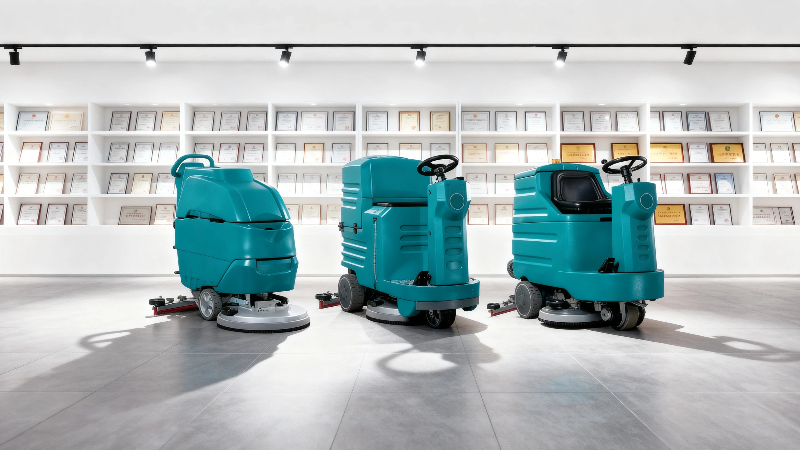
Skip to the machine that fits your square footage
21" cleaning width
2,200 sq ft/hr
Up to 25,000 sq ft
21" cleaning width
2,700 sq ft/hr
25K–80K sq ft
34" cleaning width
5,500 sq ft/hr
80,000+ sq ft
Walk-behind scrubbers are the most common choice for facilities under 25,000 sq ft. They cost less upfront, store in smaller spaces, navigate tighter aisles, and are easier to move between floors in multi-story buildings. A good walk-behind like the TerraScrub A3 covers about 2,200 sq ft per hour with a 62 dB noise level — quiet enough for daytime cleaning in occupied spaces.
Ride-on scrubbers make sense when you have more floor area than time. For a 50,000 sq ft facility, a ride-on covers the same area in roughly half the time of a walk-behind. Operator fatigue is lower on long shifts. The trade-off is higher purchase price, larger storage footprint, and elevator limitations in multi-story buildings.
When facility managers rate floor scrubbers, three factors consistently come up first: reliability (does it work every day without breaking down?), ease of daily maintenance (can my crew clean the machine in under 10 minutes?), and parts availability (can I get squeegee blades and brushes without waiting two weeks?). Speed matters, but a fast machine that is down for repairs does nobody any good.
Battery runtime is the fourth most common concern. Lithium batteries cost more upfront but charge in 1–2 hours and last 5–8 years. Lead-acid batteries are more affordable but need 8–10 hours to charge, require weekly watering, and last 3–5 years. Facilities running multiple shifts often prefer lithium for the faster turnaround.
Not every floor scrubber works well on every floor type. Sealed concrete and VCT are the most forgiving — almost any scrubber with the right brush will clean them effectively. Polished concrete needs soft brushes or pads to avoid scratching the finish. Tile and grout benefit from cylindrical brush scrubbers that agitate the grout lines. Epoxy floors need neutral pH cleaners and soft brushes to protect the coating. Unsealed concrete requires minimal water and stiff brushes.
Cleaning width determines speed — wider is faster, but only if the machine fits through your doorways. Solution and recovery tank sizes determine how often you need to stop and refill. Brush pressure settings let you adjust for light daily cleaning versus heavy-duty scrubbing. Squeegee quality determines whether floors come out dry or wet. A machine with great scrubbing but a weak squeegee leaves wet floors, which is a slip hazard.
Ease of maintenance matters more than most buyers realize. Machines with tool-free brush changes, easy-access tanks, and clear documentation save hours of frustration over the life of the machine. The best commercial floor scrubber for your facility is the one your team can actually maintain consistently.
A walk-behind scrubber typically pays for itself within 3–12 months through labor savings alone. For a 10,000 sq ft facility, switching from mopping to machine scrubbing saves roughly $17,000–23,000 per year in labor, chemicals, and water. The machine cost is recovered in the first few months. Ride-on scrubbers have a higher upfront cost but faster payback in larger facilities — often 6–12 weeks in facilities over 50,000 sq ft because the labor savings accumulate faster.
When budgeting, include consumables: brushes ($100–300 per set, every 6–12 months), squeegee blades ($30–80, every 3–6 months), and chemicals ($50–150 per month). Battery replacement every 3–5 years is the largest periodic cost. Total annual operating cost for a walk-behind scrubber is approximately $1,500–2,500 including all consumables.
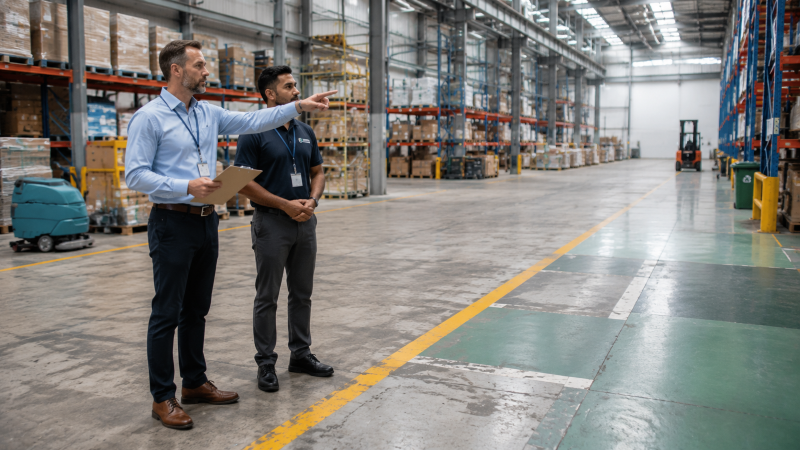
Real facility types and the scrubbers that work best for each
Tile and sealed concrete floors. Cleaned daily before opening. Low noise is essential because cleaning happens during stocking hours. Walk-behind A3 with soft brush and lithium battery for fast charging.
Carpeted offices with hard flooring corridors and break rooms. Cleaning happens overnight. Need a quiet machine. Walk-behind A3 for corridors, ride-on A5 for the lobby and cafeteria areas with sealed concrete.
Sealed concrete floors with heavy forklift traffic. Daily aisle cleaning. Need fast coverage and long runtime. Large ride-on A7 for main aisles. A3 for smaller zones around packing stations and offices.
VCT floors in corridors, tile in restrooms, concrete in gymnasiums. Cleaning happens after school hours. Mix of walk-behind and ride-on depending on corridor width. Electrical outlets available in most areas for charging.
Still asking "what is the best commercial floor scrubber for my facility?" The answer depends on your specific layout, floor type, cleaning schedule, and budget. Donnie at TerraScrub helps facility managers match the right machine to their needs every day. Tell Donnie your square footage, floor type, and cleaning frequency for a practical recommendation. Reach out at Donnie@terrascrubx.com or on WhatsApp.
Contact Donnie for confidential pricing, spec sheets, and distributor partnership details.