Two scrubbers can have the same brush width and the same coverage rate, yet one leaves a clean floor and the other leaves a greasy film. The difference is usually brush pressure — how hard the brush is pushed against the floor. Too little pressure and the brush skims over the dirt. Too much and it grinds the floor, wears coatings, and leaves marks that show up right after cleaning. Weight plays a big part in that equation, which is why machine weight is one of the first specs to understand before you buy. This guide explains what brush pressure does, where it comes from, and how to match it to your floor type.
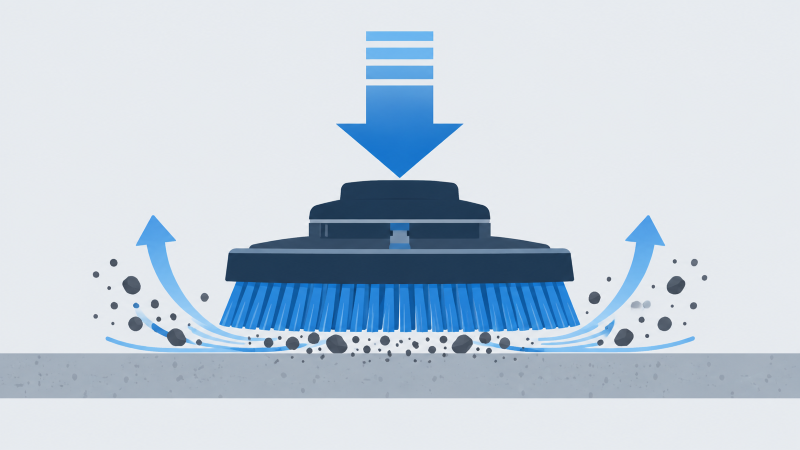
A scrubber brush doesn't just wipe the floor — it has to press dirt off the surface. That contact force is brush pressure, and it's what turns a wet pass into actual cleaning. Without enough pressure, the brush slides over oil film and embedded grime, and the floor comes out wet but not clean — which is a common cause of the streaks and film our streaks guide covers. With the right pressure, the brush breaks the bond between the dirt and the floor, and the squeegee picks up the result.
Brush pressure comes from three sources:
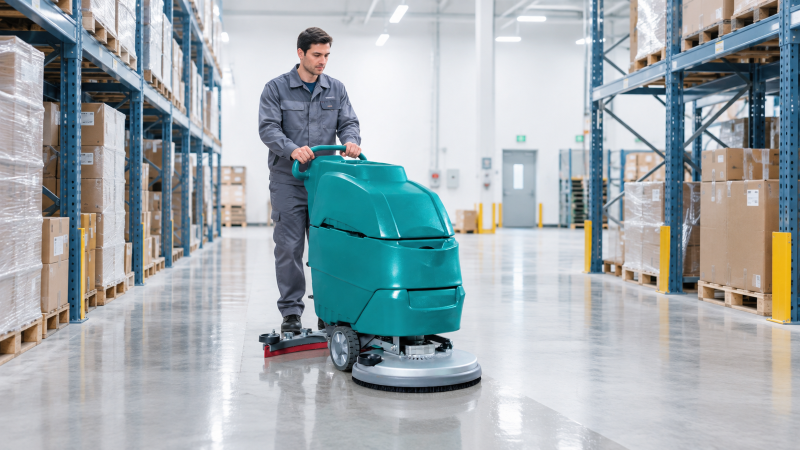
Weight matters most on open, dirty floors. On tight or delicate floors, adjustability matters more — which is a big part of choosing between the classes in our walk-behind and ride-on comparisons.
| Problem | What you see | Fix |
|---|---|---|
| Too little pressure | Wet floor that still looks dirty, greasy film, re-cleaning needed | Increase down-pressure or use a heavier machine |
| Too much pressure | Scuffed coatings, worn floor marks, brush wear | Lower pressure on delicate floors, match machine to surface |
Pressure damage is a wear problem — the same kind of slow damage our forklift floor protection guide covers, just from the scrubber instead of the truck.
Machines split into two camps. Walk-behinds like the A3 offer adjustable pressure, so one machine adapts to different floors — ideal when the same crew cleans a showroom and a loading dock. Heavy ride-ons like the BA850 and A17 rely on their mass to apply steady pressure — perfect for industrial concrete that needs serious scrubbing, but not machines to run on delicate coatings. If your facility has both, you may need one of each rather than one machine doing everything.
On dirty concrete and industrial floors, yes — more weight means more scrubbing pressure. On epoxy, polished, or tiled floors, extra weight can damage the surface. Match the weight to the floor.
Run a test pass. If the floor comes out clean in one pass, the pressure is right. If it looks wet but still dirty, increase pressure. If you see scuff marks or worn spots, decrease it.
Yes. Heavy machines or high down-pressure can scuff and wear epoxy coatings over time. Use adjustable-pressure machines set low, and test on a small area first.
For moderate grime, yes — machines like the BA680 and BA730 add weight and stronger brush motors while staying walk-behind. For heavy industrial soil, a ride-on's mass makes the difference.
Brush pressure is the hidden spec behind every clean floor — and every damaged one. Understand where pressure comes from, match it to the floor type, and choose machines that give you either adjustable pressure or the right weight for the job. The A3 for adjustable cleaning, the BA730 for heavier walk-behind duty, the BA850 for industrial runs, and the A17 for the biggest floors cover the range — and our cost guide helps with the budget side.
Contact TerraScrub
Email: Donnie@terrascrubx.com
WhatsApp: +86 166 0187 1755
No. 600, Jiye Road, Sheshan Town, Songjiang District, Shanghai, China