
There's nothing more frustrating than running a floor scrubber over a dirty floor and ending up with lines, water spots, or a hazy film that looks worse than before you started. The good news is this is one of the most common scrubber complaints, and it's almost never the machine itself. It's usually a worn part, a setting, or the water. This guide walks through the six fixes that solve the problem in most warehouses and commercial buildings, in order of how likely they are to be the culprit.
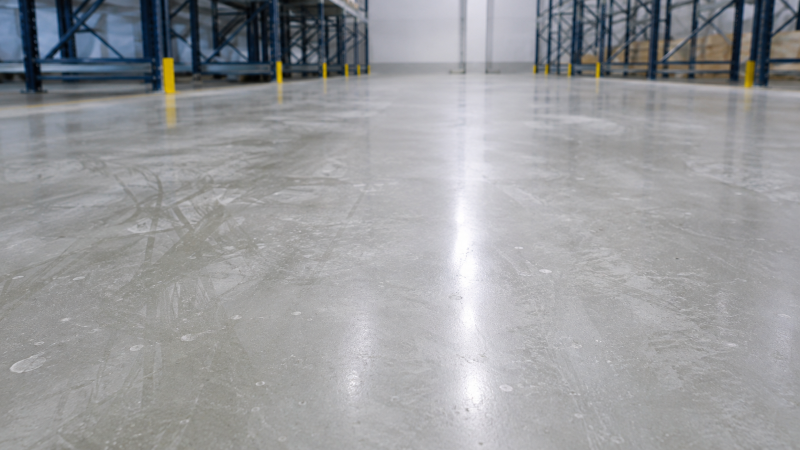
Streaks and water spots are different problems with different causes.
Once you know which one you're looking at, the fixes below are quick to work through.
This is the number one cause of streaks. If the squeegee blades are dirty, worn, or not sitting evenly on the floor, water gets left behind in lines. Take the squeegee off, wash the blades, check both edges for nicks and wear, and make sure it sits flat against the floor with even pressure across the full width. A little angle adjustment often clears the streaks immediately.
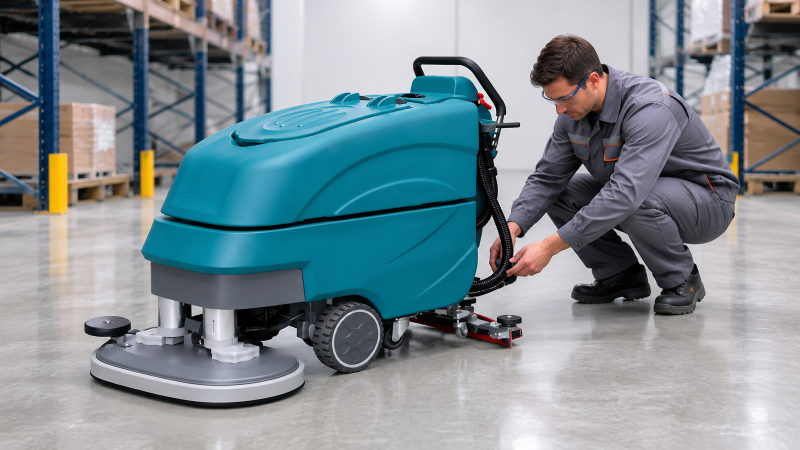
A worn brush or pad leaves an uneven cleaning pattern, which shows up as streaks once the floor dries. Look at the bristles or pad surface: if it's matted, shiny, or thinner on one side, replace it. Also check brush pressure. If the machine has adjustable pressure, raise it slightly for heavily soiled floors and lower it on delicate surfaces.
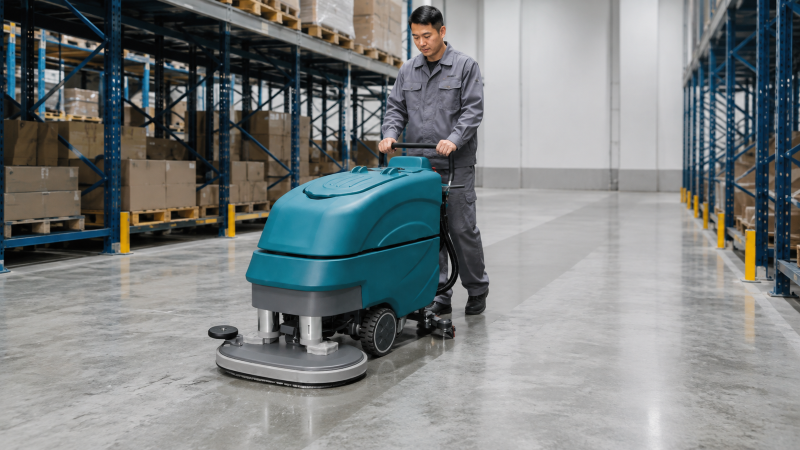
Speed is the sneaky one. When you drive faster than the machine's rated speed, the brush doesn't have time to clean and the squeegee doesn't have time to pick everything up. The result is streaks and a wet floor. Drop to a walking pace and watch what happens. In most cases, the floor comes out dry and clean.
If the marks are white spots or a film that appears after drying, hard water is often the cause. Minerals in the water stay behind when the floor dries, especially in areas with high water hardness. Use filtered or softened water if you can, or add a descaling product to the tank periodically to keep scale from building up inside the machine.
Too much detergent leaves a sticky film that shows up as a haze once it dries. Use the dilution on the label, and make sure you're using a low-foam cleaner designed for scrubbers. Excess foam also reduces vacuum pickup, which can look like a squeegee problem when it's actually a foam problem.
If residue has built up over months, one pass won't fix it. Run a first pass with cleaning solution, then a second pass with clean water only to rinse the floor. Make sure the recovery tank and vacuum hose are clear, because a clogged vacuum means water stays on the floor no matter how well the squeegee is adjusted.
| Symptom | Most likely cause | Fastest fix |
|---|---|---|
| Long lines in travel direction | Squeegee dirty, worn, or misaligned | Clean, replace, or realign squeegee |
| Uneven cleaning pattern | Worn brush or pad, low pressure | Replace brush, adjust pressure |
| Wet floor after passing | Driving too fast, clogged vacuum | Slow down, clear vacuum hose |
| White spots or film after drying | Hard water, too much chemical | Softer water, correct dilution, rinse pass |
If you've worked through all six fixes and the floor still comes out streaky, look at the machine itself. Old or damaged squeegee hardware, a cracked vacuum line, or a worn brush deck can cause the same symptoms, and those need servicing rather than adjustment. It's also worth checking whether the floor itself is the problem — unsealed concrete absorbs water unevenly and can look streaky no matter what the machine does. Our concrete floor cleaning guide covers sealed versus unsealed floors, and if oil stains have made the surface uneven, the oil stain removal guide shows how to get back to a clean slate.
White residue after drying usually means hard water minerals or too much detergent. Switch to filtered or softened water, check your chemical dilution, and run a rinse pass with clean water.
It depends on how much you run the machine, but most facilities replace them every few months, or as soon as you notice streaking that cleaning won't fix. Worn blades are the cheapest thing that causes the most expensive-looking damage.
Yes. When hard water dries, the minerals stay behind as white spots or a film. That's why facilities in hard-water areas see spotting even with a brand-new machine and fresh squeegee.
At a comfortable walking pace. Going faster than the machine's rated speed leaves water and dirt behind. If the floor is heavily soiled, go slower and let the brush do the work.
Streaks and water spots are annoying, but they're almost always fixable in a few minutes. Start with the squeegee, check the brushes, slow down, and watch your water and chemical use. If the machine itself needs attention, the A3 walk-behind and A7 ride-on pages list the details, and our warehouse sizing guide helps if you're considering a new machine. For safety around wet floors while you troubleshoot, OSHA's slips and falls page has practical guidance.
Contact TerraScrub
Email: Donnie@terrascrubx.com
WhatsApp: +86 166 0187 1755
No. 600, Jiye Road, Sheshan Town, Songjiang District, Shanghai, China