Diagnose and fix the most common water recovery failures in commercial floor scrubbers — from squeegee blade wear to vacuum motor issues.
When your floor scrubber leaves a trail of dirty water instead of a dry, clean path, the problem almost always traces back to one of seven points in the recovery system. The squeegee assembly, vacuum hose, recovery tank filter, float switch, and vacuum motor form a chain — break any link and water stays on the floor. This guide walks through each cause in diagnostic order, from the easiest 2-minute fix to the ones that need a service call, so you can get your TerraScrub A3 or A7 ride-on scrubber back to work without waiting for a technician.
Quick Diagnostic Flow
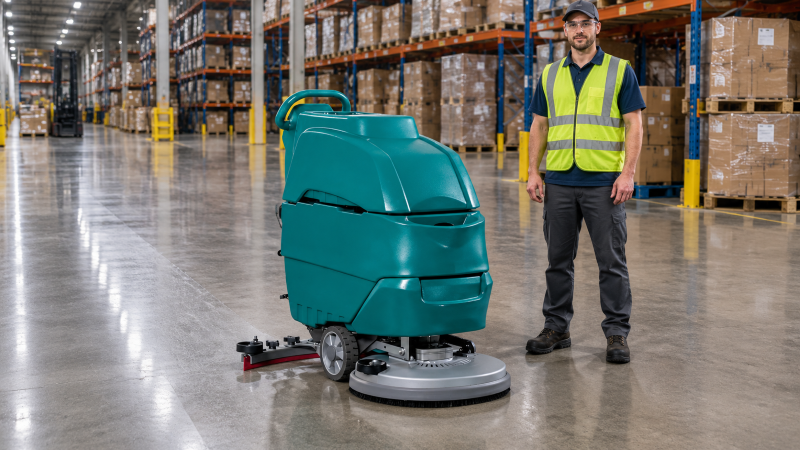
The squeegee blade is the most common culprit. It rides flat against the floor, scraping water into the vacuum channel. After 200-300 hours of use, the leading edge rounds off and loses contact with the floor surface. You will see water escaping from the sides of the squeegee rather than being channeled inward.
The vacuum hose connects the squeegee to the recovery tank. Over time, debris, hair, and hardened dirt build up inside the hose walls, narrowing the airflow passage. A partial clog reduces suction. A full clog stops water recovery entirely. You can usually detect this by a change in the vacuum motor sound — it runs higher-pitched when airflow is restricted.
The recovery tank has a filter screen where the vacuum hose connects. Its job is to stop debris from reaching the vacuum motor. When it gets coated with sludge, airflow drops and water stays on the floor. This filter is easy to forget because it sits inside the tank and is not visible during daily operation.
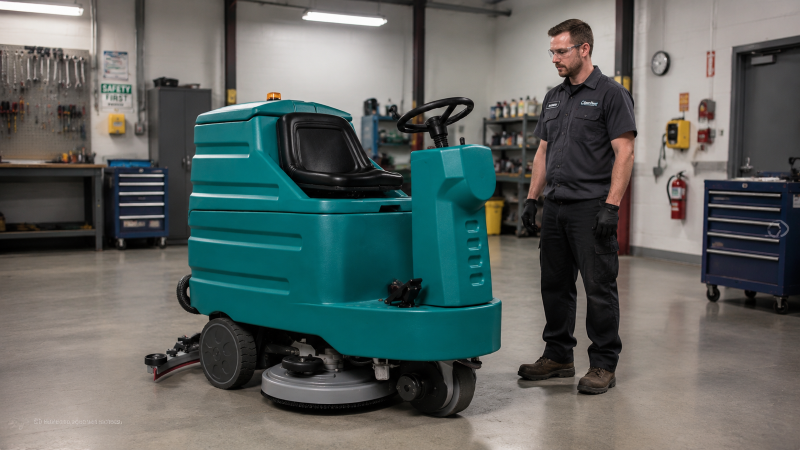
Every floor scrubber has a float switch that shuts off the vacuum motor when the recovery tank is full. This protects the motor from water damage. If the tank is full, the float rises and cuts power. If the float mechanism gets stuck in the up position due to debris, the motor stays off even when the tank is empty.
The squeegee assembly mounts to the machine with a bracket and adjustment knobs. If the bracket is loose, the squeegee bounces and skips over the floor instead of maintaining consistent contact. If the mounting is cracked, the squeegee angles to one side, leaving a gap on the opposite side where water escapes.
The vacuum motor creates the suction that pulls water from the squeegee into the recovery tank. Motors fail gradually — suction weakens over weeks before stopping completely. A failing motor may also produce a burning smell or unusual vibration. The A3 uses a 550W suction motor; the A7 uses a 500W motor. Both are brush-type motors with a service life of 1,000-1,500 hours under normal use.
The recovery system is sealed. Any gap between the squeegee, hose, tank lid, and motor allows air to enter, reducing suction at the floor surface. The most common leak points are the tank lid gasket and the hose connection clamps. A leak large enough to affect water pickup is often audible as a hissing sound when the vacuum motor runs.
The ISSA estimates that improper maintenance causes over 60% of floor scrubber downtime. A weekly 15-minute inspection of the squeegee, hose, and filter prevents most water pickup failures. OSHA standard 29 CFR 1910.22 also requires floors to be kept dry, which makes functioning water recovery a compliance issue, not just a cleaning preference.
| Replacement Part | Replace Every | Difficulty |
|---|---|---|
| Squeegee blade (A3, 770mm) | 200-300 hours | Easy |
| Squeegee blade (A7, 1100mm) | 200-300 hours | Easy |
| Tank filter screen | 6 months | Easy |
| Tank lid gasket | 12 months | Medium |
| Vacuum hose assembly | 2-3 years | Medium |
| Carbon brushes (vacuum motor) | 1,000 hours | Hard |
| Vacuum motor (complete) | 1,000-1,500 hours | Hard |
Still dealing with water on the floor after checking all seven causes? Email Donnie@terrascrubx.com or message on WhatsApp. Tell us your machine model and what you have already checked — we will pinpoint the issue and ship the right replacement part.
Email: Donnie@terrascrubx.com
WhatsApp: +86 166 0187 1755