A 120,000 sq ft food processing plant earned its SQF Level 2 certification by turning floor hygiene into a documented daily routine — and the audit findings proved it.
This 120,000 sq ft food processing plant passed its SQF Level 2 audit with zero major non-conformances, after rebuilding its floor hygiene program around a documented daily sanitizing routine. The core change: replacing uncontrolled mop-and-bucket floor cleaning with a scheduled scrubber protocol backed by written records, chemical concentration logs, and verified drying times. The audit team specifically noted the plant's floor cleaning documentation — every shift logged, every chemical batch recorded, every squeegee inspection on file. This case study covers the sanitation standard, the routine built to meet it, the documentation system, and the audit result.
The plant's previous SQF audit returned two major non-conformances, both rooted in floor sanitation documentation. The sanitation crew cleaned floors daily — but nothing was written down. No schedule on file, no chemical concentration logs, no verification that cleaning actually happened. Under SQF, what is not documented did not happen. The auditor could not verify floor hygiene because the plant had no records, no defined method, and no person accountable for the result.
The second issue was method. Mop-and-bucket cleaning had no defined chemical ratio, no contact time, and no verification step. Bucket water was reused until visibly dirty, which under an SQF lens is a cross-contamination vector. The corrective action required a defined, documented, verifiable floor cleaning procedure.
The sanitation manager rebuilt the program around a documented daily routine with three fixed cleaning windows per day. The morning washdown after production start, a mid-shift floor scrub of high-traffic zones, and the end-of-day deep sanitizing cycle. Each window had a defined procedure, a chemical protocol, and a log sheet.
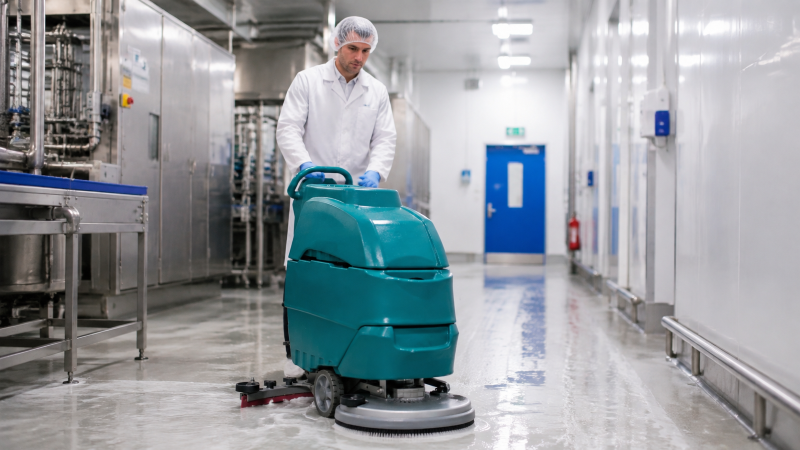
Machine cleaning replaced mops on all hard floors. The plant deployed walk-behind scrubbers with food-grade chemical injection, using a neutral pH, low-foam, food-surface-safe cleaner approved for the facility's washdown protocol. The scrubber's recovery system gave the plant something mops could not: every pass removed dirty water instead of spreading it, and the floor dried in 3–5 minutes — measurable, documented, verifiable.
Documentation was the entire point of the program. Every cleaning event produced a record: the shift log sheet with time stamps, the chemical concentration log with batch numbers, the squeegee and brush inspection register, and the daily sanitation verification sign-off by the shift supervisor. The plant also installed a simple visual verification — operators check that the floor dries within 5 minutes after each scrub, and the time is recorded.
The documentation lived in a three-ring binder at the sanitation station, plus scanned copies kept in the food safety file for the auditor. When the auditor asked "how do you verify floor cleaning happened?", the answer was no longer a description — it was a stack of signed logs going back 90 days.
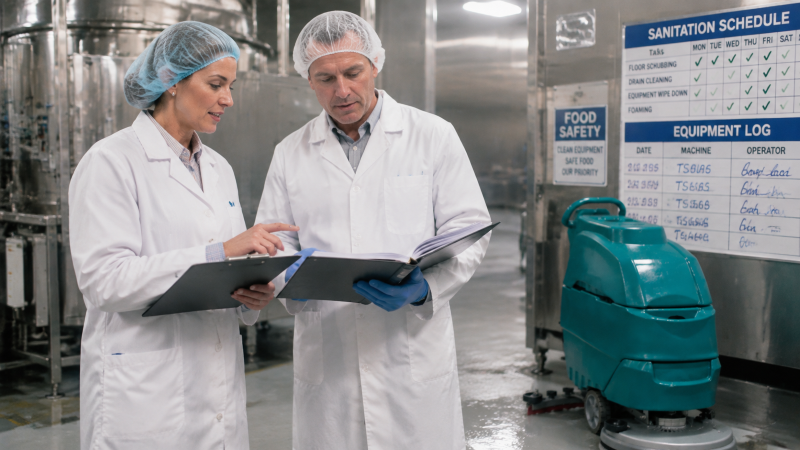
At the SQF Level 2 audit, the floor sanitation program passed without a single major non-conformance. The auditor reviewed the shift logs, chemical records, and inspection registers, and verified the routine in practice during a live sanitation window. The plant's corrective action from the previous audit was closed out with the documentation system as the supporting evidence.
Beyond certification, the routine produced operational wins. Floor cleaning time per day fell by about 40% because the scrubber replaced manual mopping, and the sanitation crew's time shifted from floor work to the higher-priority equipment and surface sanitizing the audit cares about most. Drain and floor inspection findings in the plant's internal weekly checks improved steadily through the first quarter.
The auditor told us the documentation alone would have closed the corrective action. The scrubber made the process faster and more consistent — but the logs are what turned a routine into a program.
Building a floor sanitation program for an audit or certification? Donnie at TerraScrub helps food processing facilities choose scrubbers and build documented cleaning routines that hold up to SQF, BRC, and HACCP audits. Tell Donnie your facility size, production zones, and audit standard for practical guidance. Reach out at Donnie@terrascrubx.com or on WhatsApp.
Contact Donnie for confidential pricing, spec sheets, and distributor partnership details.