One operations team, twelve hotels, forty different cleaning approaches. Here is how the group built one floor care standard — one equipment lineup, one SOP, one training program — and cut floor cleaning time by 35% while making housekeeping quieter than the guest complaints about it.
This 400-room hotel group operated 12 properties — a mix of full-service, select-service, and extended-stay brands — and each one cleaned floors its own way. Some properties mopped, some used rented scrubbers, some used walk-behinds of three different brands with three different chemical systems. The result was inconsistent quality, unpredictable costs, and a guest experience that varied by property. Over a nine-month program, the group standardized on one walk-behind scrubber lineup, one chemical protocol, and one written floor care SOP. Floor cleaning time dropped 35% across the portfolio, marble and tile restoration calls fell by half, and the annual equipment cost per property fell 22% through consolidated purchasing. This case study covers the problem, the standardization playbook, the rollout, and the measurable results.
Before the program, a facility audit found forty different floor care approaches across the twelve properties. Three properties used only mops. Two rented scrubbers weekly — paying rental fees that exceeded the cost of owning a machine within months. Seven owned scrubbers, but across four different brands, each with its own brushes, chemicals, and training requirements. Housekeeping staff at one property had never been shown how to adjust a squeegee.
The guest-visible cost was inconsistency. A marble lobby at one hotel gleamed because that property happened to own a proper burnishing pad. At another property, the same marble was dull and etched from years of the wrong chemical. Front desk staff at three hotels logged guest complaints about noisy cleaning equipment during early morning housekeeping — the loudest being a ride-on scrubber used in a lobby at 4:30 AM.
We were not managing floor care. We were managing twelve different experiments. The first step was admitting that and standardizing.
The equipment decision came down to four requirements agreed by the operations team and the brand standards committee. First, noise — anything used during housekeeping hours had to operate below 65 dB, which eliminated ride-on machines from lobbies and upper corridors. Second, fit — machines had to pass through standard 32-inch guest corridor doorways and fit in housekeeping closets. Third, simplicity — one machine model meant one training program and one parts inventory. Fourth, quiet operation during daylight hours so cleaning could happen during stayover service instead of only after check-out.
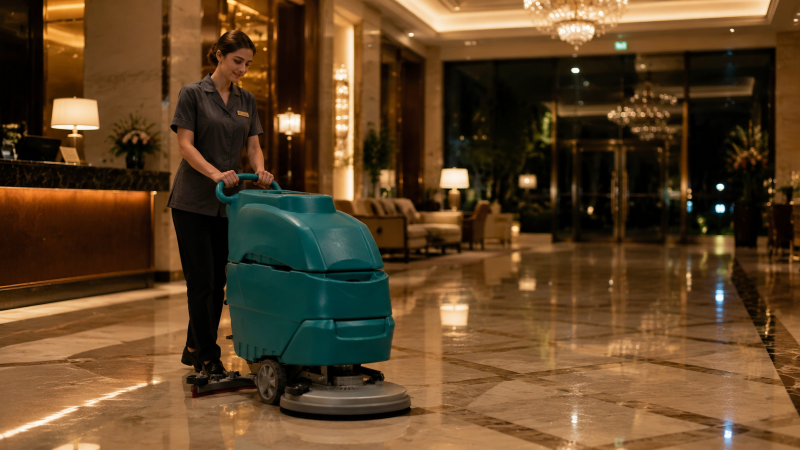
The group selected walk-behind scrubbers with a 21-inch cleaning width as the single standard, plus a burnishing pad package for marble and polished tile lobbies. Lithium batteries were specified after the pilot showed they allowed mid-day charging between housekeeping shifts — a capability the previous lead-acid machines never had.
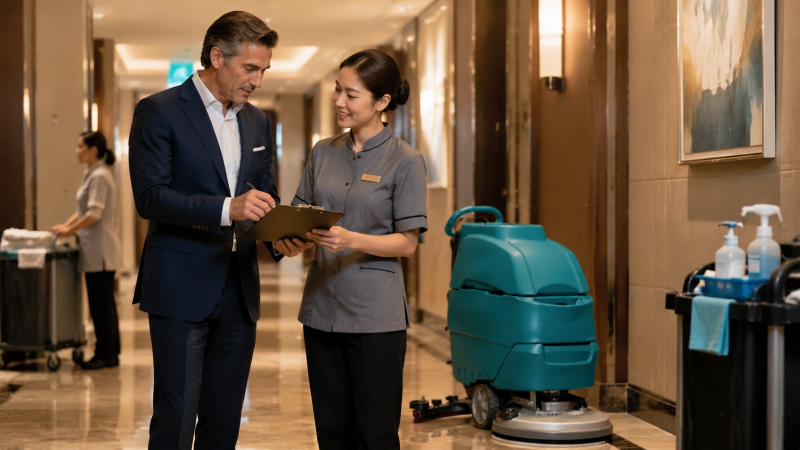
Training followed the machine delivery schedule: two properties per month over six months, with a two-hour session per property covering the pre-op checklist, technique, and end-of-day maintenance. The operations team wrote a single training packet in plain language and translated it for housekeeping staff where needed. Each property named a floor care lead — one housekeeping supervisor responsible for the machine, the checklist compliance, and ordering consumables through the new consolidated parts channel.
The results were compiled from housekeeping logs, purchasing records, and guest feedback reports across all twelve properties. Floor cleaning time per property fell by an average of 35% — the properties that had been mopping saw the largest gains, with the most extreme property dropping from 5.5 hours to 2.4 hours of daily floor labor. Because the scrubbers leave floors dry in 3–5 minutes, corridors could be cleaned during stayover service with a single wet floor sign, eliminating the "hallway closed" problem that had forced cleaning into early morning hours.
Costs moved in the right direction too. Annual floor equipment cost per property fell 22% after the first full year, driven by consolidated purchasing of machines, brushes, and chemicals through one channel instead of twelve property-level suppliers. Marble and tile restoration calls — the expensive fix when floors are cleaned wrong for years — fell by half in the first nine months as the burnishing protocol kept finishes alive instead of letting them die.
The quietest compliment came from a guest who wrote that the lobby felt "fresher" at 3 PM — she had watched the housekeeper clean it in minutes with a machine quieter than the lobby music. That is exactly the standard we wanted.
Standardizing floor care across your hotel group? Donnie at TerraScrub helps hospitality operations teams choose quiet, consistent machines and build floor care programs that fit brand standards. Tell Donnie your portfolio size, floor types, and housekeeping schedule for practical guidance. Reach out at Donnie@terrascrubx.com or on WhatsApp.
Contact Donnie for confidential pricing, spec sheets, and distributor partnership details.