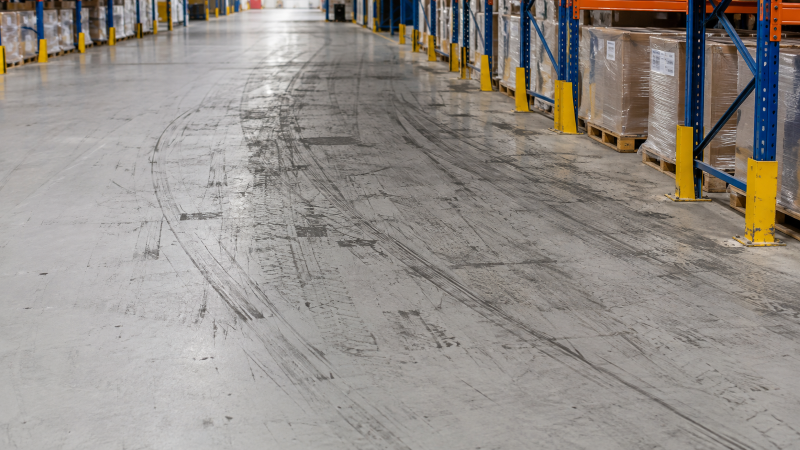
Forklifts are the number one cause of floor damage in a warehouse, and the damage usually isn't a dramatic crash. It's the slow stuff: tire marks that build into black layers, coating that scuffs and peels along traffic lanes, and small impact chips that grow into bigger problems. The repair bill for a damaged warehouse floor is far bigger than the cost of preventing the damage, so protection is a maintenance decision, not a construction one. This guide covers the four ways forklifts damage floors and the practical steps that keep the damage from happening in the first place.
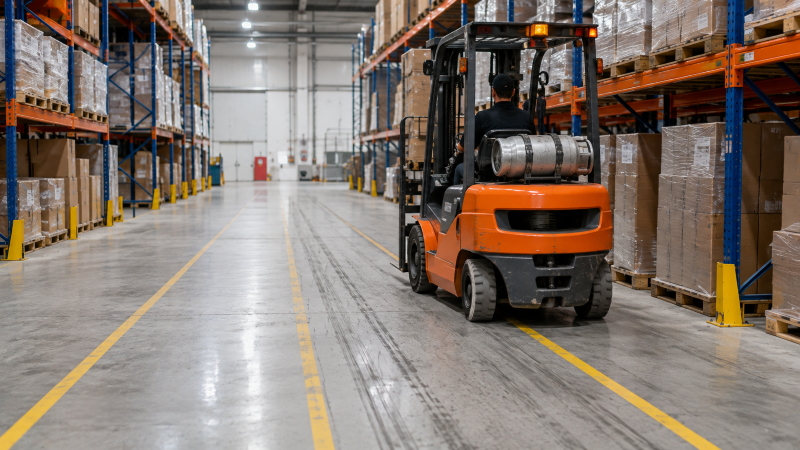
A sealed or coated floor is the first line of defense. The sealer takes the wear instead of the concrete, and it makes tire marks release easily instead of bonding to the surface. When the coating starts scuffing, it can be recoated — that's routine maintenance. When bare concrete wears, that's a bigger problem. Sealing is the same reason it shows up in our 5S guide and epoxy floor aging guide.
The cheapest repair is the one you catch early. Add a weekly floor walk to the routine:
Yes, over time. Tire marks, coating wear, and impact chips all come from normal forklift operation, not just accidents. The damage is slow, which is exactly why it gets ignored until it's expensive.
Keep the floor sealed and clean the marks on a schedule. Sealed floors release marks in a normal scrubber pass; unsealed floors let them bond. Our tire mark guide covers the removal side.
A coating (like epoxy) is thicker and protects better under heavy traffic, while a sealer is cheaper and easier to maintain. Start with the level of traffic the floor sees, and recoat before the wear reaches bare concrete.
Small chips and cracks should be patched early, before they grow. Wear on the coating means a recoat. The key is catching both in the weekly inspection instead of the yearly one.
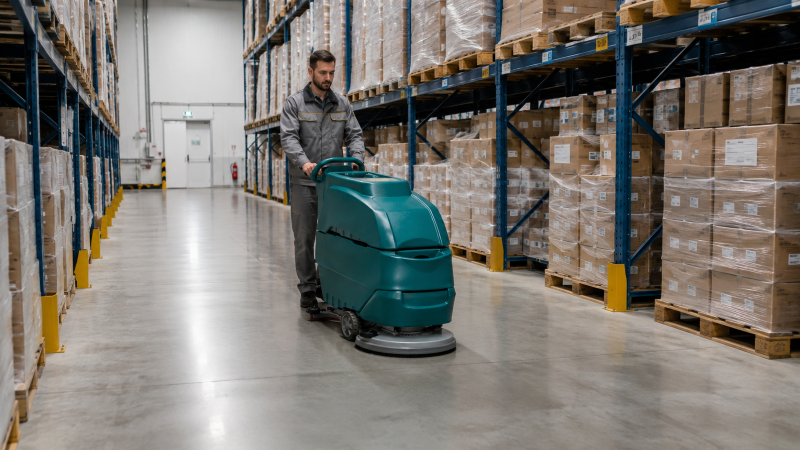
Forklift damage is a wear problem, and wear problems respond to routine: seal the floor, protect the lanes, watch the tires, and inspect weekly. The machines that keep the floor clean between inspections — an A3 walk-behind or an A7 ride-on — are the same ones that keep the floor presentable. Pair the routine with our streaks guide and the labor cost guide, and the floor stays protected without eating the budget.
Contact TerraScrub
Email: Donnie@terrascrubx.com
WhatsApp: +86 166 0187 1755
No. 600, Jiye Road, Sheshan Town, Songjiang District, Shanghai, China