Concrete is the most common industrial floor surface, but not every scrubber handles it well. Here is how to pick the right machine based on floor area, finish type, and daily soil load.
Picking a floor scrubber for concrete comes down to three things: how much area you clean per shift, what kind of dirt lands on that floor, and whether the surface is sealed or bare. A machine that excels on a 2,000 m² sealed warehouse floor will struggle on rough unfinished concrete with oil and metal shavings. This guide walks through concrete floor types, the key specs that actually matter, and three TerraScrub machines that cover the full range from compact walk-behind to large ride-on scrubbers.
Concrete is porous. Even sealed concrete absorbs moisture and oil if the sealer wears thin. That means you need a scrubber with enough brush pressure to agitate dirt out of micro-pores, but not so much that it gouges the sealer. Unsealed concrete is worse: it acts like sandpaper on brush bristles and absorbs dirty water before the squeegee can recover it.
The OSHA Walking-Working Surfaces standardhttps://terrascrubx.com/machines requires employers to keep floors clean and dry to prevent slip and fall injuries, which account for over 5,800 lost-time injuries annually in general industry. A scrubber that leaves the floor virtually dry immediately after the squeegee passes is the difference between compliance and a wet-floor hazard.
Smooth, low-porosity surface. Neutral pH detergent at 1:128 dilution. Light brush pressure. Squeegee recovery is excellent.
Rough, porous. Alkaline degreaser at 1:64. Heavier brush pressure needed. Expect faster brush wear.
Smooth but delicate. Neutral detergent only. Avoid high brush pressure or you risk scratching the coating.
Densified with lithium silicate. Low-porosity. Neutral detergent, light to medium brush pressure.
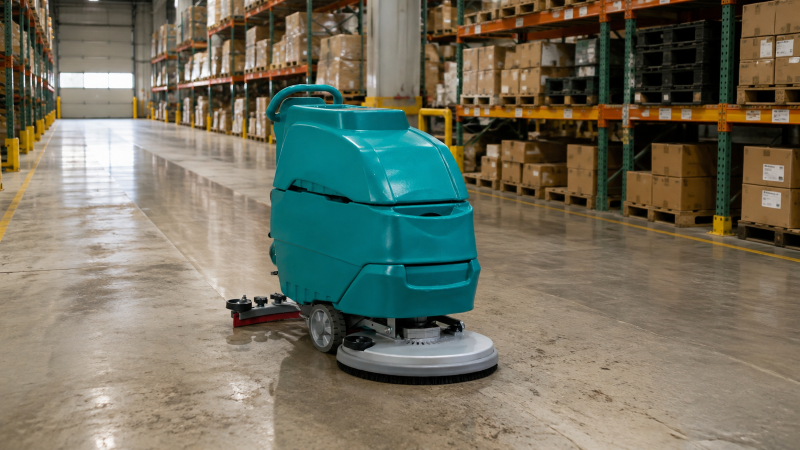
Four specs dominate concrete cleaning performance: brush type (disc vs. cylindrical), brush pressure (kg), solution flow rate (L/min), and squeegee width. Disc brushes handle smooth sealed concrete well. Cylindrical brushes are better for rough concrete with debris, but disc brushes are more common and easier to replace.
For sealed concrete, 30-40 kg of brush pressure is plenty. Bare concrete with oil stains may need 50+ kg. The solution flow rate determines how much area one tank covers. A 50L tank at 1.0 L/min gives you about 50 minutes of cleaning time. On sealed concrete, that translates to roughly 3,000 m² per tank.
| Floor Area | Recommended Machine | Cleaning Path | Productivity |
|---|---|---|---|
| Up to 25,000 sq ft | TerraScrub A3 (walk-behind) | 21 in (530mm) | 2,200-2,400 m²/h |
| 25,000-80,000 sq ft | TerraScrub A7 (ride-on) | 34 in (860mm) | 5,500 m²/h |
| 80,000+ sq ft | TerraScrub BA850 (ride-on) | 33.5 in (850mm) | 5,800 m²/h |
The TerraScrub machines lineup covers the full range. For smaller facilities like auto repair shops or retail backrooms, the A3 walk-behind at 50in × 22in × 43in is compact enough to fit through standard doorways and clean aisles under 4 feet wide. Its 21-inch single disc brush and parabolic squeegee leave concrete virtually dry.
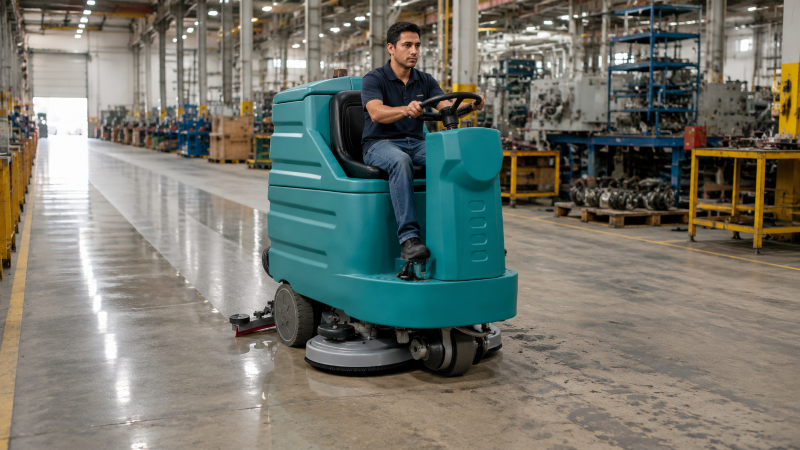
Your concrete floor is under 25,000 sq ft, you have narrow aisles or tight corners, or you need to move the machine between multiple smaller areas. The A3 at 2,400 m²/h cleans a 20,000 sq ft warehouse in about one tank fill.
Your floor exceeds 25,000 sq ft and you clean daily. The A7 at 5,500 m²/h with a 34-inch dual brush deck and 140L tank covers a 50,000 sq ft distribution floor in roughly one shift. For the largest facilities, the BA850 at 5,800 m²/h with a 180L tank and 36V/200Ah battery handles 80,000+ sq ft per charge. The BA850 ride-on floor scrubber also includes an automatic brush lift and anti-collision bumper for concrete environments with rack legs and equipment.
Concrete dust is abrasive. It wears brushes faster than any other floor type. Check brush bristle length weekly on machines cleaning bare concrete; replace when bristles drop below 15mm. Empty and rinse the recovery tank after every shift: concrete slurry settles at the bottom and hardens into a cement-like layer that blocks the vacuum motor filter.
For daily chemical selection, sealed concrete pairs best with a neutral pH cleaner (pH 7-9) at 1:128 dilution. Bare concrete with oil contamination needs an alkaline degreaser (pH 10-11) at 1:64. Never use acidic cleaners (pH below 5) on concrete; they etch the surface and shorten the sealer life.
For more cleaning chemical guidance and dilution ratios across different floor types, the TerraScrub insights library covers chemical selection, maintenance schedules, and equipment comparisons in depth.
Beyond the machine purchase price, budget for brush replacement every 200-400 hours on bare concrete (twice as fast as sealed). Solution tank filters need monthly cleaning. Squeegee blades last 300-500 hours on smooth concrete but only 150-200 hours on rough unfinished surfaces. Factor these consumables into your 12-month operating cost, not just the upfront machine price.
A good concrete floor scrubber pays for itself through labor savings. One A7 ride-on at 5,500 m²/h replaces roughly 6-8 manual moppers. At $18-22 per hour per worker, the machine earns back its cost in under a year for any facility cleaning more than 30,000 sq ft daily.
Not sure which TerraScrub model fits your concrete floor? Tell us your floor area, concrete type, and daily soil load. Donnie will recommend the right machine, brush type, and chemical plan for your facility.
Email Donnie: Donnie@terrascrubx.com
WhatsApp: +86 166 0187 1755