How facility managers handle floor cleaning in multi-level buildings — from equipment transport and elevator logistics to water management and scrubber selection across different floor types and traffic patterns.
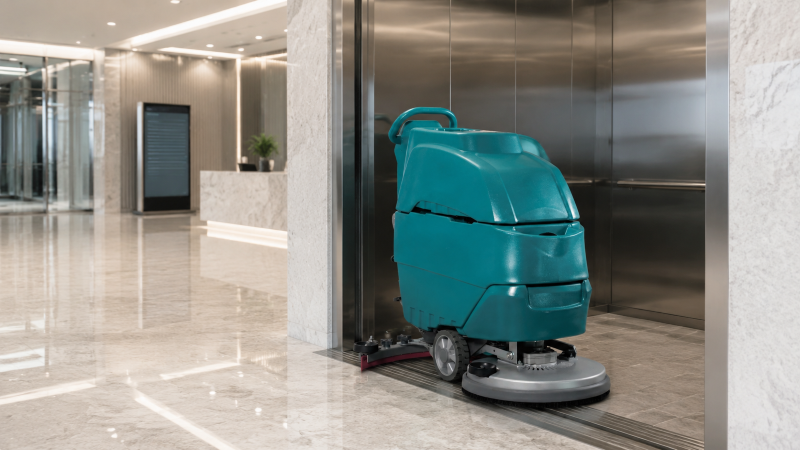
The single biggest logistical challenge in multi-story building floor cleaning is moving equipment between levels. A walk-behind floor scrubber weighs 150–400 lbs depending on battery configuration. A ride-on scrubber can weigh 800–2,000 lbs. Not every elevator is built for that.
Freight elevators are the obvious solution, but not every building has one. Passenger elevators can work for walk-behind machines under 500 lbs — check the elevator's weight rating first. For ride-on scrubbers in buildings without freight elevators, the practical solution is to keep one machine per floor or use a walk-behind that can be moved through service elevators and standard doorways.
The most common mistake facility managers make with multi-story cleaning is buying one large ride-on machine for the whole building, then realizing it does not fit in the elevator.
For buildings with 6+ stories, the most efficient setup is often a compact walk-behind scrubber per zone covering 3–4 floors each. The machine stays on its assigned floors, charged in a janitorial closet, and never needs an elevator ride. Initial investment is higher, but the time saved on elevator waiting, transport, and setup more than covers the cost within 6–12 months.
Not every scrubber works well in a multi-story environment. The ideal machine for multi-level cleaning is compact enough to fit in service elevators and standard doorways (under 30 inches wide), light enough for elevator weight limits (under 500 lbs with battery), equipped with lithium batteries for opportunity charging between floor runs, and easy to drain — because emptying dirty water on an upper floor requires a mop sink or a drain access plan.
Every gallon of water you put on the floor has to come off the floor. On ground level, you can empty the recovery tank into a floor drain or mop sink. Ten floors up, you do not have that option. The water you carry up must come back down — either through the machine's recovery tank or through buckets and mops.
Facility managers use three strategies: use the minimum solution flow to reduce water weight, schedule recovery tank emptying on each floor before returning to ground level, and for sealed floors, consider dry scrubbing with a dust control pad to handle light daily maintenance without water at all.
A floor scrubber uses 70% less water than mopping the same area. On upper floors, that matters because every gallon saved is one less gallon to drain and carry.
Different floors in the same building have different cleaning needs. The ground floor — lobby and main entrance — gets the most traffic and needs the most frequent attention. Upper floors with offices and meeting rooms have moderate traffic and can be cleaned less often. The top floor executive suites may have different flooring materials and higher appearance standards.
Daily scrubbing. Highest traffic. Lobby, entrances, food service areas. Use ride-on for large open areas if accessible.
2–3 times per week. Office corridors, restrooms, break rooms. Walk-behind scrubber per zone, rotated schedule.
1–2 times per week. Executive offices, conference rooms. Light scrubbing with compact machine.
Weekly heavy scrub. Concrete floors, garage ramps. Use ride-on with stiff brushes for tire marks and oil spots.
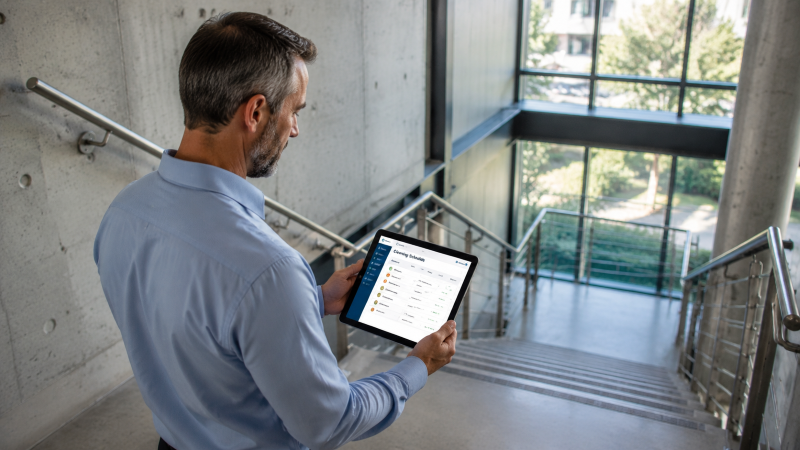
Stairwells are the most overlooked areas in multi-story building floor cleaning. They accumulate dust and debris quickly because people use them between floors, but they are difficult to clean with a scrubber. Commercial stairwells need manual sweeping and mopping or spot cleaning — there is no practical scrubber solution for steps.
Elevator cleaning requires timing. The best approach is to schedule elevator cleaning during low-traffic periods, clean one elevator at a time so the others remain in service, and use a quick-dry method — a damp mop or a compact scrubber with minimal water. Elevator tracks and door channels need weekly vacuuming to prevent debris buildup that causes alignment issues.
A good multi-story cleaning plan is invisible to building occupants. The lobby is clean when they arrive. The corridor on their floor is fresh when they step out of the elevator. That takes planning, but it is absolutely achievable with the right equipment and schedule.
Managing floor cleaning in a multi-story building? Donnie at TerraScrub has helped facility managers set up multi-level cleaning plans with the right machines, schedules, and logistics. Tell Donnie your building's floor count, square footage per level, and elevator access for a practical recommendation. Reach out at Donnie@terrascrubx.com or on WhatsApp.
Contact Donnie for confidential pricing, spec sheets, and distributor partnership details.